
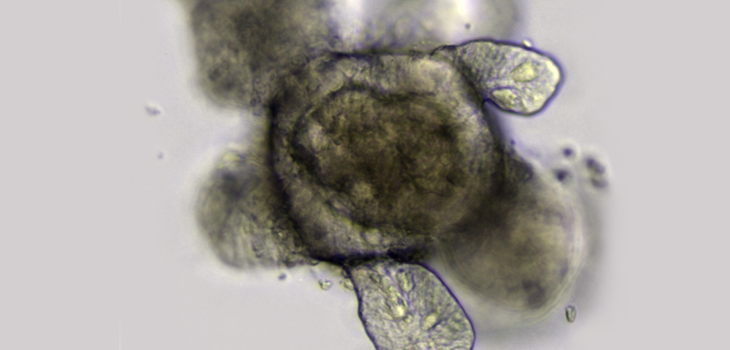
Welcome to the world of organoids—miniature stem cell derived human organs.
Organoids Set to Dominate Stem Cell Therapy
1 min read Premium comments
Secondary
According to Don Gibbons, writing for MedPage Today, organoids are expected to become “invaluable tools” for modeling disease, drug screening, toxicity testing, and a wide variety of therapeutic purposes.
Participants at the Boston June 2017 meeting of the International Society for Stem Cell Research learned of organoids generated from pluripotent stem cells.
Hans Clevers, M.D., Ph.D., of Humbrecht Institute in the Netherlands, called the gut stem cell “the champion of all stem cells,” in that it replaces the entire intestinal lining of treated rodents every four days as well as seeking out and healing induced lesions. Similarly, gastric organoids have been able to heal Helicobacter-induced lesions in the stomachs of rodents.
First developed about four years ago, organoids have now been made for virtually every organ. Clevers said it is quite easy to source the starting cells. Lung organoids can be grown from sputum, and bladder and kidney organoids can be made from urine.
Organoids generated from adult pluripotent stem cells—usually by reprogramming adult cells from patients to create personalized organoids, or brain organoids, are the most controversial of the new cellular entities.
Researchers noted that patients viewed their mini-organs differently from how they did their stem cells in a dish. Gibbons quoted panelist Marieke Broekman, M.D., Ph.D., of Harvard Medical School, whose patients would declare with some emotion, “That is my mini brain” upon seeing their neural cell organoid.
The use of brain cells to create organoids raises the issue of creating animal/human chimers or more humanized animals. The stem cell field has long dealt with the ethical issues of creating animal/human chimers, particularly involving brain cells, said Insoo Hyun, Ph.D., of Case Western Reserve University in Cleveland. Organoid brain work could result in animals much more humanized than cell-based work, he cautioned.
Speaking from the audience, according to Gibbon’s report was Bernard Siegel, J.D., of the Regenerative Medicine Foundation, who said: “This is a Dolly the sheep moment.” which raised the question, to what extent is creating an organoid creating a person?
Author
React:
Discussion
This is a fascinating development. In my practice we've seen similar outcomes with the revised protocol. The key differentiator seems to be patient selection criteria. Has anyone else noticed the correlation with BMI thresholds?
Great point. I'd push back slightly on the conclusion, the sample size in the cited study is too small to draw population-level inferences. That said, the directional signal is compelling and worth a larger RCT.
We implemented a similar approach last year. Early results are promising but we're still gathering 12-month follow-up data. Happy to share our protocol if anyone is interested.
Join the conversation
Orthopedic professionals are discussing this. Sign in and upgrade to read every comment and add your voice.