
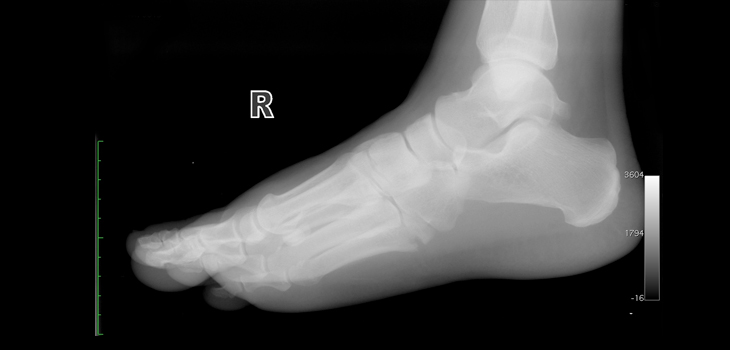
Using a plantar plating technique to treat proximal fifth metatarsal fractures in elite athletes offers better stability than intramedullary screw fixation, according to a recent paper published by surgeons from the Houston Methodist Orthopedics & Sports Medicine in Houston, Texas in the May/June 2017 issue of Orthopedics.
New Technique for Jones Fracture Fixation Improves Stability
1 min read Premium comments
Secondary
Proximal fifth metatarsal fractures also known as Jones fractures are common in elite athletes and while intramedullary screw fixation is the most common surgical treatment, nonunion and refracture remain a concern with this technique.
Kevin Varner, M.D., chair of Houston Methodist Orthopedics & Sports Medicine and a foot and ankle orthopedic surgeon told OTW that the treatment of zones II and III proximal fifth metatarsal fractures with plantar-lateral plating with cancellous bone autograft “has been shown to be biomechanically superior to intramedullary screw fixation for this fracture pattern.”
Varner added, “Plate fixation offers the ability to gain purchase in the proximal fracture fragment which offers improved rotational control.”
Varner recommends this new technique for patients who have pre-existing stress response at the fracture site, such as cortical thickening or beaking associated with plantar lateral gapping. He also said it is an effective method for those with an established nonunion or refracture.
While hardware prominence is a potential complication of this technique, Varner said it is not one they have seen with the use of low profile plate fixation.
“None in our series have had symptomatic hardware or removal of hardware,” he said.
According to Varner, future research should focus on “long term follow up and a direct comparison to intramedullary screw fixation for time to union, time to full return to sports and refracture rates.”
Author
React:
Discussion
This is a fascinating development. In my practice we've seen similar outcomes with the revised protocol. The key differentiator seems to be patient selection criteria. Has anyone else noticed the correlation with BMI thresholds?
Great point. I'd push back slightly on the conclusion, the sample size in the cited study is too small to draw population-level inferences. That said, the directional signal is compelling and worth a larger RCT.
We implemented a similar approach last year. Early results are promising but we're still gathering 12-month follow-up data. Happy to share our protocol if anyone is interested.
Join the conversation
Orthopedic professionals are discussing this. Sign in and upgrade to read every comment and add your voice.