
AMB Surgical, based in Dayton, Ohio, has received an investment from the Accelerant Venture Capital Fund to further its development of its Flyte Automated Growing Rod. The amount of the investment was not disclosed.
AMB Surgical Raises Funding for Scoliosis Growing Rod
2 min read Premium comments
Secondary
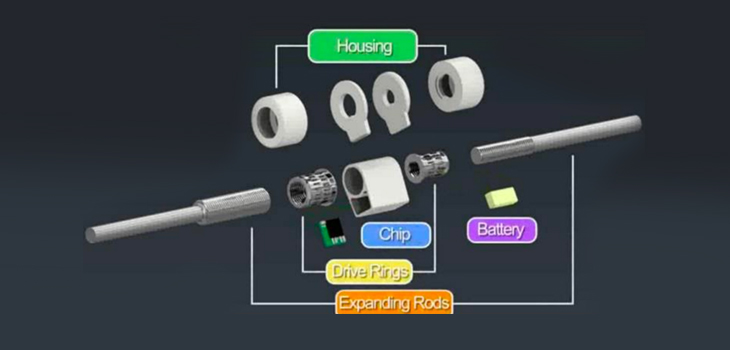
Tyson Ross, Ph.D., cofounder of AMB Surgical, told OTW, “The inspiration for the AMB Surgical II Flyte Automated Growing rod is actually from the daughter of one of the founders, Casel Burnett. Casel’s daughter suffered from juvenile scoliosis, and after gaining insight regarding the treatment of scoliosis using growing rods, we developed the automated growing rod. The purpose of the rod is to eliminate or reduce the number of invasive surgeries a child would need to endure for successful treatment. AMB are the initials for the name of Casel’s daughter, and we use those initials to remind us of the mission of the company, to improve patient treatment.”
“AMB embodies the innovative spirit and hard work that characterize the Dayton Region,” said Roger Edwards, Vice President of Accelerant Venture Capital Fund, an initiative of the Dayton Development Coalition, in the June 1, 2017 news release. “Their work has the potential to revolutionize the way these conditions are treated and spare young patients repeated, invasive procedures.”
Dan Sands, a 25-year healthcare industry executive, has been advising AMB via his consulting business, D11, LLC, since August 2016. Now he will be the chief executive officer of AMB Surgical. Sands said in the news release, “The positive market interest for this technology has been extraordinary. Flyte’s ability to give surgeons real-time biomechanical stress/strain data will allow more accurate and timely remote non-surgical adjustments. This represents a game changing advancement in orthopaedics and could lead to a new frontier in bionic implantable devices that improves the total cost and quality of care.”
Dr. Ross told OTW, “AMB is completing a round of funding to build the initial units of the automated growing rod to verify performance as ‘struts’ on an external fixation frame and as a ‘smart growing rod’ for spinal implant applications. We also plan to begin the necessary FDA approval processes.”
“AMB’s Flyte is unique and is capable of making very precise adjustments to the compression or distraction of the device. Additionally, Flyte uses biofeedback to give real time updates to the surgeon and user, so that the state of the device is always known and adjustments can be made outside the body, thus avoiding additional surgeries. Additionally, adjustments and the state of Flyte are stored on board, so that the records and Flyte’s status are carried as a patient history and adjustments could be made anywhere in the world.”
“We look at this as an evolution in the treatment of severe orthopedic deformities, and the data collection ability of the rod and (remote) smart adjustments will allow doctors to have greater success in outcomes and lower the total cost of care.”
Author
React:
Discussion
This is a fascinating development. In my practice we've seen similar outcomes with the revised protocol. The key differentiator seems to be patient selection criteria. Has anyone else noticed the correlation with BMI thresholds?
Great point. I'd push back slightly on the conclusion, the sample size in the cited study is too small to draw population-level inferences. That said, the directional signal is compelling and worth a larger RCT.
We implemented a similar approach last year. Early results are promising but we're still gathering 12-month follow-up data. Happy to share our protocol if anyone is interested.
Join the conversation
Orthopedic professionals are discussing this. Sign in and upgrade to read every comment and add your voice.