
Researchers from Duke University, CytexTherapeutics, Inc., Washington University in St. Louis (WUSTL), and Shriners Hospitals for Children-St. Louis are taking arthritis treatment way into the future. Their work, “Genome Engineering of Stem Cells for Autonomously Regulated, Closed-Loop Delivery of Biologic Drugs,” was published online in the April 27, 2017 edition of Stem Cell Reports.
Rewired Stem Cells=Arthritis Vaccine
2 min read Premium comments
Secondary
The team, led by Farshid Guilak, Ph.D., a professor of orthopedic surgery at WUSTL, set out to create an arthritis vaccine that would only deliver the drug during a flare up of the disease. And unlike anti-tumor necrosis factor-alpha (anti TNF-alpha) drugs, this one would target the joint as opposed to being spread out system-wide.
Dr. Guilak told OTW, “There is a lot of interest in stem cell injections into the joint, but we don’t have great data indicating that this prevents arthritis or treats joint degeneration. We wanted to essentially develop a vaccine for arthritis.”
“We used a tool known as CRISPR (clustered regularly interspaced short palindromic repeats) that allows you to edit the DNA of cells with high precision. We removed a gene involved in the inflammatory process and replaced it with a gene that releases a drug that combats inflammation.”
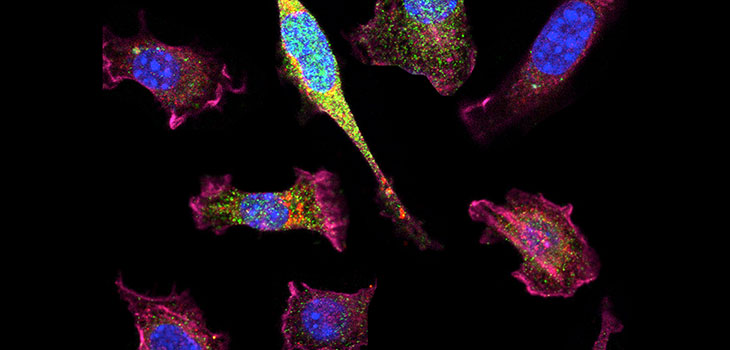
Dr. Guilak, also a professor of developmental biology and of biomedical engineering and co-director of the WUSTL Center of Regenerative Medicine, added, “Our team grew mouse stem cells in a test tube and then recoded the cells to act in a protective fashion. These are SMART cells (Stem cells Modified for Autonomous Regenerative Therapy) that actually produce a biologic anti-inflammatory drug that acts only when and where needed. We modified stem cells to grow into cartilage cells and produce cartilage tissue, which turned out to be shielded from the inflammatory process.”
The team is working on this protective drug in a mouse model at present. “The mice that were injected with these smart cells displayed a quick automatic response of the therapeutic gene when a TNF flare arose,” says Dr. Guilak. “If things continue to go well, we just may be able to move quickly to human safety trials.”
Conflict of Interest: Drs. Brunger, Gersbach, and Guilak have filed patents relating to the work described in this article.
Author
React:
Discussion
This is a fascinating development. In my practice we've seen similar outcomes with the revised protocol. The key differentiator seems to be patient selection criteria. Has anyone else noticed the correlation with BMI thresholds?
Great point. I'd push back slightly on the conclusion, the sample size in the cited study is too small to draw population-level inferences. That said, the directional signal is compelling and worth a larger RCT.
We implemented a similar approach last year. Early results are promising but we're still gathering 12-month follow-up data. Happy to share our protocol if anyone is interested.
Join the conversation
Orthopedic professionals are discussing this. Sign in and upgrade to read every comment and add your voice.