
Researchers from Mercy Health Osteoporosis and Bone Health Services in Cincinnati, Ohio; the Colorado Center for Bone Research at Centura Health in Lakewood, Colorado, and the Johns Hopkins University School of Medicine in Baltimore, Maryland, wanted to sort out the murky question of the role of teriparatide in the healing of atypical femur fractures.
New Study: Teriparatide Fails at Fracture Healing
2 min read Premium comments
Secondary
Their work, “Responses to Treatment With Teriparatide in Patients With Atypical Femur Fractures Previously Treated With Bisphosphonates,” appeared in the May 17, 2017 edition of The Journal of Bone and Mineral Research.
The authors wrote, “If oversuppression of bone turnover explained the association between bisphosphonate use and atypical subtrochanteric femur fractures (AFF), this could be reversed with anabolic treatment such as teriparatide.”
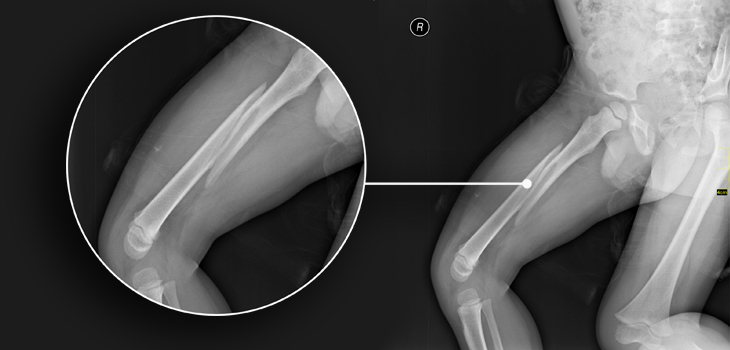
Nelson B. Watts M.D., director of the Mercy Health Osteoporosis and Bone Health Services, and co-author on the study told OTW, “’Atypical’ femoral fractures have been in the news. While they have been associated with treatment with bisphosphonates, causality is not clear. The fractures can be found early, before they are complete. Complete fractures require surgical repair but often do not heal well. Optimal medical management is not clear.”
The team undertook a prospective study in 14 patients who had previously received bisphosphonates and who had experienced an AFF. They examined the effects of 24 months’ of treatment with teriparatide on bone mineral density (BMD), trabecular bone score (TBS), bone turnover markers (BTM), and fracture healing as well as quantitative histomorphometry.
The authors wrote, “…On initial bone biopsies, 12 of 14 patient showed tetracycline labels, but mineralizing surface/bone surface was below published normal values in all but 2. Lumbar spine BMD increased significantly at month 24 (6.1% ± 4.3%, p < 0.05 versus baseline), whereas total hip BMD and TBS did not change significantly. Changes in BTM occurred as reported previously for patients without AFF treated with teriparatide after prior bisphosphonate treatment…”
Dr. Watts commented to OTW, “In our study, patients were treated with teriparatide. Despite seeing improvement in bone density and increases in the bone formation marker, P1NP [procollagen type 1 N propeptide], healing was not uniform—some patients healed, some did not.”
“While teriparatide treatment may improve bone density and reduce the risk of later fractures due to osteoporosis, it cannot be relied on to lead to fracture healing.”
Author
React:
Discussion
This is a fascinating development. In my practice we've seen similar outcomes with the revised protocol. The key differentiator seems to be patient selection criteria. Has anyone else noticed the correlation with BMI thresholds?
Great point. I'd push back slightly on the conclusion, the sample size in the cited study is too small to draw population-level inferences. That said, the directional signal is compelling and worth a larger RCT.
We implemented a similar approach last year. Early results are promising but we're still gathering 12-month follow-up data. Happy to share our protocol if anyone is interested.
Join the conversation
Orthopedic professionals are discussing this. Sign in and upgrade to read every comment and add your voice.