
Spinal deformity surgery is a delicate matter…no need to make it more difficult by not doing what is possible to avoid potential pitfalls.
New Study Tackles Spine Deformity Hospital Acquired Condition
2 min read Premium comments
Secondary
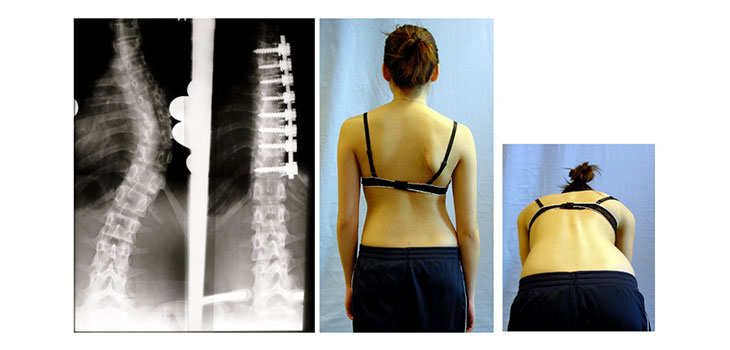
New research from Mount Sinai in New York City finds several key factors which can either raise or lower the risk of hospital acquired conditions in spine deformity surgery.
The study, titled “Hospital-Acquired Conditions in Adult Spinal Deformity Surgery: Predictors for Hospital-Acquired Conditions and Other 30-Day Postoperative Outcomes,” was published in the April 15, 2017 edition of Spine.
Samuel K. Cho, M.D., co-author on the study, associate professor of Adult and Pediatric Spine Surgery at Icahn School of Medicine at Mount Sinai told OTW, “We as spine surgeons are always interested in maximizing patient outcomes and minimizing complication rates. In particular, adult spinal deformity surgery is known to have high complication rates, some of which can be very serious.”
“We decided to utilize the nationally representative surgical data to study perioperative complications to study whether we could identify risk factors that are associated with certain complications. Further, we hoped to ascertain those risk factors that are modifiable. For example, your age is a non-modifiable risk factor. On the other hand, you can lower your complication risk by better managing diabetes.”
The authors wrote, “The 2010 to 2014 ACS-NSQIP [American College of Surgeons National Surgical Quality Improvement Program] database was queried using Current Procedural Terminology (CPT) codes for adults who had fusion for spinal deformity. Patients were divided into two cohorts on the basis of the development of an HAC [Hospital-Acquired Condition], as defined as a case of surgical site infection, urinary tract infection, or venous thromboembolism.”
“This was a retrospective analysis of a large, national database with variables that pertain to surgical patients. Because of the large numbers of patients included, we are able to perform multivariate regressions to identify independent risk factors.”
“We found that several modifiable and non-modifiable factors (age, functional status, surgical approach, utilization of osteotomies, steroid use, obesity, and operation time ≥4 hours) were associated with developing a hospital acquired condition. These hospital acquired conditions were also risk factors for other postoperative complications. In some sense not too surprising but we found that HACs, in turn, became risk factors for other complications.”
“As complication rates are not trivial in adult spinal deformity surgery, we ought to do everything possible to minimize the risks. This study showed that there are certain modifiable risk factors that the surgeon and the patient can work on to minimize complication risk.”
Author
React:
Discussion
This is a fascinating development. In my practice we've seen similar outcomes with the revised protocol. The key differentiator seems to be patient selection criteria. Has anyone else noticed the correlation with BMI thresholds?
Great point. I'd push back slightly on the conclusion, the sample size in the cited study is too small to draw population-level inferences. That said, the directional signal is compelling and worth a larger RCT.
We implemented a similar approach last year. Early results are promising but we're still gathering 12-month follow-up data. Happy to share our protocol if anyone is interested.
Join the conversation
Orthopedic professionals are discussing this. Sign in and upgrade to read every comment and add your voice.