
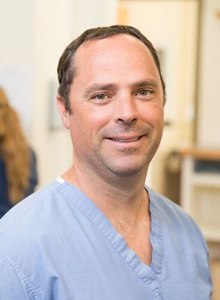
Michael Bradley, M.D., M.B.A., M.S. has joined the Scientific Advisory Board (SAB) of Intellijoint Surgical, a company based in Waterloo, Ontario. Dr. Bradley is chief of orthopedics at South County Hospital in Wakefield, Rhode Island, and President/CEO of Ortho Rhode Island.
Michael Bradley, M.D., M.B.A., M.S. Joins Intellijoint SAB
1 min read Premium comments
#intellijoint#michaelbradleymd
“Dr. Bradley was a key player in developing the recently FDA cleared intellijoint HIP Anterior and will continue to be a great asset in guiding the development of future applications for hip replacements and other orthopaedic procedures,” commented Armen Bakirtzian, CEO and Co-Founder, Intellijoint Surgical, in the May 3, 2017 news release.
Dr. Bradley told OTW, “I look forward to having a direct impact on the current and next generation of Intellijoint Surgical’s innovative navigation products that are improving surgical accuracy intraoperatively and patient outcomes post-operatively.”
“Over the next few months, I will be assisting with clinical feedback for the recently FDA cleared intellijoint HIP Anterior. A full market release is expected mid-summer and I am excited for other surgeons to have access to this level of accuracy to replace fluoroscopy verification in their direct anterior total hip arthroplasty procedures.”
According to the news release, other surgeons of Intellijoint Surgical’s SAB include: Chairman, Dr. Allan Gross, an orthopaedic surgeon at Mount Sinai Hospital (Toronto, Ontario), and members, Dr. Javad Parvizi at Thomas Jefferson University Hospital (Philadelphia, Pennsylvania), Dr. Michael Cross at Hospital for Special Surgery (New York, New York), Dr. Wayne Paprosky at Rush University Medical Center (Chicago, Illinois), and Dr. Ran Schwarzkopf at New York University Langone Hospital for Joint Diseases (New York, New York).
Author
React:
Discussion
This is a fascinating development. In my practice we've seen similar outcomes with the revised protocol. The key differentiator seems to be patient selection criteria. Has anyone else noticed the correlation with BMI thresholds?
Great point. I'd push back slightly on the conclusion, the sample size in the cited study is too small to draw population-level inferences. That said, the directional signal is compelling and worth a larger RCT.
We implemented a similar approach last year. Early results are promising but we're still gathering 12-month follow-up data. Happy to share our protocol if anyone is interested.
Join the conversation
Orthopedic professionals are discussing this. Sign in and upgrade to read every comment and add your voice.