
Cartiva Inc. of Alpharetta, Georgia, has completed enrollment and treatment of all 50 patients in a multi-center study evaluating the safety and effectiveness of Cartiva’s Synthetic Cartilage Implant (SCI) for first carpometacarpal (CMC) joint osteoarthritis at the base of the thumb.
First 50 Patients Enrolled in Cartilage Study
1 min read Premium comments
Secondary
The company conducted the study at nine sites in Canada and the United Kingdom.
Basal thumb arthritis afflicts more than two million American adults, up to one-third of whom are post-menopausal women.
Osteoarthritis of the CMC joint— also known as thumb basal joint arthritis -impacts 8% to 12% of the general population and as many as 33% of postmenopausal women. It causes pain, swelling, instability, deformity, loss of motion and weakness, making it difficult to perform a variety of tasks, such as turning doorknobs and opening jars.
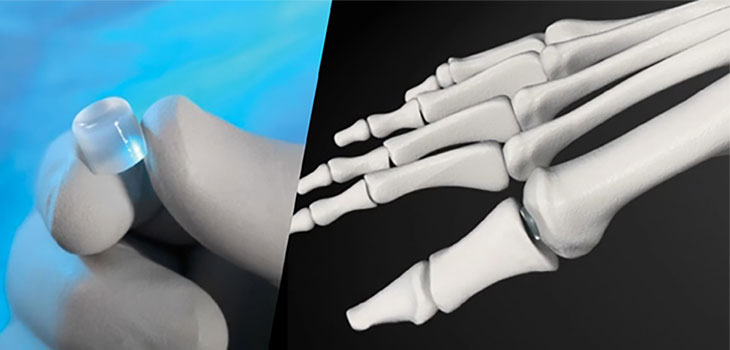
Cartiva SCI is a biocompatible polymer device designed to mimic natural cartilage. The Company received Premarket Approval from the FDA to commercialize Cartiva SCI to treat osteoarthritis at the base of the great toe.
The thumb implant treats osteoarthritis in patients with diseased or damaged articular surface in the first CMC joint. It is implanted in the metacarpal base to replace damaged cartilage without destroying or removing healthy tissue. According to the company’s press release, the implant’s design minimizes bone resection while preserving the trapezium.
Philip Sauve, a Consultant and Orthopaedic Surgeon at Queen Alexandra Hospital in Portsmouth, England has treated twelve patients with Cartiva. He said, “So far we have had good results. Their pain is reducing, their grip strength is increasing and so their function is improving. These early results are very promising but we will have to wait to see how the Cartiva implant performs over a longer period of time. For that group of patients who are still working and still very active, I think it’s a really good option.”
In February of last year the Company attended a pre-submission meeting with the (FDA). It plans to review the interim six-month results next month.
Author
React:
Discussion
This is a fascinating development. In my practice we've seen similar outcomes with the revised protocol. The key differentiator seems to be patient selection criteria. Has anyone else noticed the correlation with BMI thresholds?
Great point. I'd push back slightly on the conclusion, the sample size in the cited study is too small to draw population-level inferences. That said, the directional signal is compelling and worth a larger RCT.
We implemented a similar approach last year. Early results are promising but we're still gathering 12-month follow-up data. Happy to share our protocol if anyone is interested.
Join the conversation
Orthopedic professionals are discussing this. Sign in and upgrade to read every comment and add your voice.