
Despite the fact that physicians extract compatible bone marrow from thousands of donors for their patients, roughly 20,000 other patients are left waiting every year for a bone marrow transplant that could cure them of bone marrow diseases.
Artificial Bone Tissue Could Produce Marrow
1 min read Premium comments
Secondary
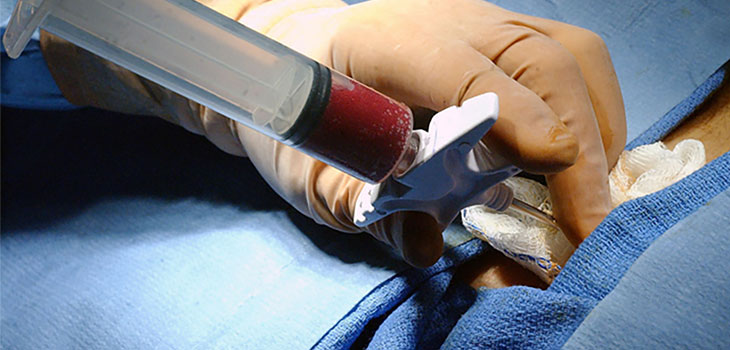
Harvesting stem cells from a healthy donor’s hip or sternum is an arduous procedure that takes time to recover from and has a success rate of around 60%. Now scientists from the University of California at San Diego have created “biomimetic” bone tissue which could one day provide bone marrow for those needing transplants. This would do away with waiting lists and the hunt for a donor—as well as making the procedure less extreme.
A team led by bioengineering professor Shyni Varghese, Ph.D. at the University of California San Diego Jacobs School of Engineering has developed an implant which can be filled with donor cells but gives these cells enough space to live and grow without their having to fight off existing cells. The team claims that this “eliminates the need to wipe out the host’s pre-existing cells.”
They are hopeful that the radiation and chemotherapy aspects of the procedure may, one day, not be required.
“We’ve made an accessory bone that can separately accommodate donor cells,” Varghese said. “This way we can keep the host cells and bypass irradiation.”
Published in the journal Proceedings of the National Academy of Sciences, the research describes how in tests with mice, the synthetic bone was filled with donor cells and implanted under the mice’s skin. Over the course of at least six months, the bone was able to survive and supply the mice with fresh blood cells.
Author
React:
Discussion
This is a fascinating development. In my practice we've seen similar outcomes with the revised protocol. The key differentiator seems to be patient selection criteria. Has anyone else noticed the correlation with BMI thresholds?
Great point. I'd push back slightly on the conclusion, the sample size in the cited study is too small to draw population-level inferences. That said, the directional signal is compelling and worth a larger RCT.
We implemented a similar approach last year. Early results are promising but we're still gathering 12-month follow-up data. Happy to share our protocol if anyone is interested.
Join the conversation
Orthopedic professionals are discussing this. Sign in and upgrade to read every comment and add your voice.