
Young athletes should save their money and not spend it on sports drinks.
Toss the Sports Drinks – Use Water for Hydration
1 min read Premium comments
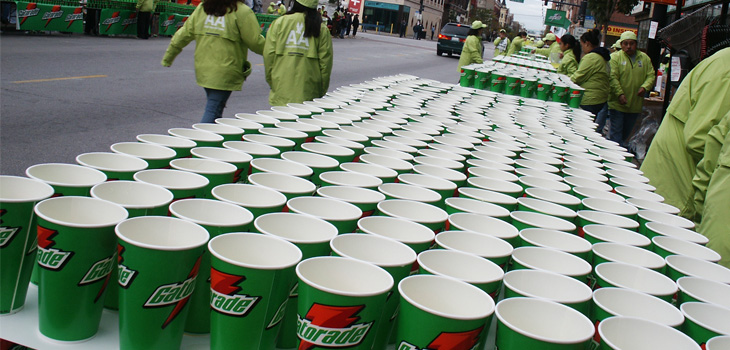
Secondary
Sports specialists say that water is a far better bet for hydration for young athletes than are the drinks. Most youngsters don’t exert themselves at intensity or for a long enough time that requires the extra sugar and salt contained in sports drinks, said Matthew Silvis, M.D. director of primary care sports medicine at Penn State Health Medical Center.
“Sports drinks can replenish some of what you lost during exercise, but you really need to be exercising for more than 45 minutes to an hour before you would consider that,” he said.
Silvis noted that giving children sports drinks with extra sugar puts them at risk for weight gain and tooth decay.
Katie Gloyer, M.D. is a primary care sports medicine physician at Penn State Medical Group, in State College, Pennsylvania. She agreed that “kids and adolescents should not be using these drinks. Water is the best method of hydration.”
Also ill-advised are energy drinks that contain caffeine. These can raise blood pressure, cause heart palpitations and heart rhythm disorders.
Author
React:
Discussion
This is a fascinating development. In my practice we've seen similar outcomes with the revised protocol. The key differentiator seems to be patient selection criteria. Has anyone else noticed the correlation with BMI thresholds?
Great point. I'd push back slightly on the conclusion, the sample size in the cited study is too small to draw population-level inferences. That said, the directional signal is compelling and worth a larger RCT.
We implemented a similar approach last year. Early results are promising but we're still gathering 12-month follow-up data. Happy to share our protocol if anyone is interested.
Join the conversation
Orthopedic professionals are discussing this. Sign in and upgrade to read every comment and add your voice.