
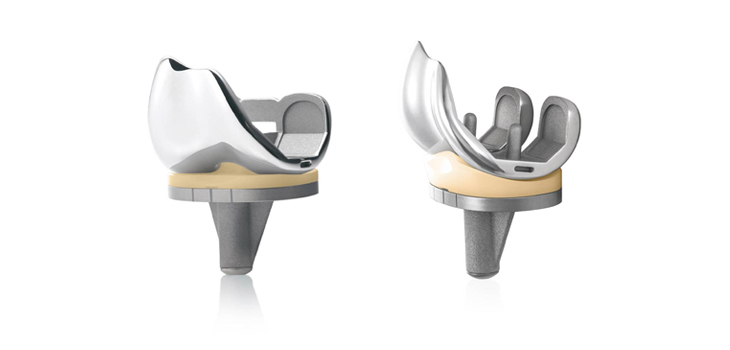
Taiwan-based United Orthopedic Corporation’s E-XPE polyethylene knee insert has been cleared by the FDA for sale in the U.S.
Taiwanese Poly Knee Insert Cleared for U.S.
2 min read Premium comments
Secondary
According to an April 12, 2017 company announcement, the insert is designed to provide patients with knee replacements with reduced risk of oxidation. Calvin Lin, president of United Orthopedic Corporation USA, said, “Oxidation continues to be a concern for surgeons. The E-XPE polyethylene is resistant to oxidation and performs extremely well with respect to abrasive wear resistance.”
The insert is a highly cross-linked polyethylene blended with 0.1% (w/w) vitamin E to enhance wear resistance without compromising oxidative stability and mechanical properties.
Indications
The device (CR, PS and UC type and patella,) according to FDA documents, is indicated in knee arthroplasty for “reduction or relief of pain and/or improved knee function in skeletally mature patients with severe knee pain and disability due to rheumatoid arthritis, osteoarthritis, primary and secondary traumatic arthritis, polyarthritis, collagen disorders, avascular necrosis of the femoral condyle or pseudogout, posttraumatic loss of joint configuration, particularly when there is patellofemoral erosion, dysfunction or prior patellectomy, moderate valgus, varus, or flexion deformities. This device may also be indicated in the salvage of previously failed surgical attempts if the knee can be satisfactorily balanced and stabilized at the time of surgery. This device is a single use implant and intended for cemented use only.”
The E-XPE insert (PSA type) is indicated in knee arthroplasty for “reduction or relief of pain and/or improved knee function in skeletally mature patients with severe knee pain and disability due to rheumatoid arthritis, osteoarthritis, primary and secondary traumatic arthritis, polyarthritis, collagen disorders, avascular necrosis of the femoral condyle or pseudogout, posttraumatic loss of joint configuration, particularly when there is patellofemoral erosion, dysfunction or prior patellectomy, moderate valgus, varus, or flexion contraction. This device is intended for use in patients who require augmentation and/or stem extensions due to inadequate bone stock and/or require constrained stabilization for tibiofemoral joint due to soft tissue imbalance. This device is a single use implant and intended for cemented use only.”
Predicate Devices
The company’s clearance request stated that predicate devices included its own U2 Total Knee System, Renovis Surgical Technologies’ A200 Knee System, DePuy’s PFC Sigma Knee System and Biomet’s Vanguard DCM Conventional Tibial Bearings.
The differences between the E-XPE and the predicate devices, according to the company, are size distribution, device dimension and material.
Vertically Integrated Manufacturing
The company was established in 1993 in Taiwan to supply orthopedic practitioners and institutions around the world with arthroplasty implant and instrument designs created by its vertically integrated, in-house manufacturing team. In March 2014, the company entered the U.S. market.
Author
React:
Discussion
This is a fascinating development. In my practice we've seen similar outcomes with the revised protocol. The key differentiator seems to be patient selection criteria. Has anyone else noticed the correlation with BMI thresholds?
Great point. I'd push back slightly on the conclusion, the sample size in the cited study is too small to draw population-level inferences. That said, the directional signal is compelling and worth a larger RCT.
We implemented a similar approach last year. Early results are promising but we're still gathering 12-month follow-up data. Happy to share our protocol if anyone is interested.
Join the conversation
Orthopedic professionals are discussing this. Sign in and upgrade to read every comment and add your voice.