
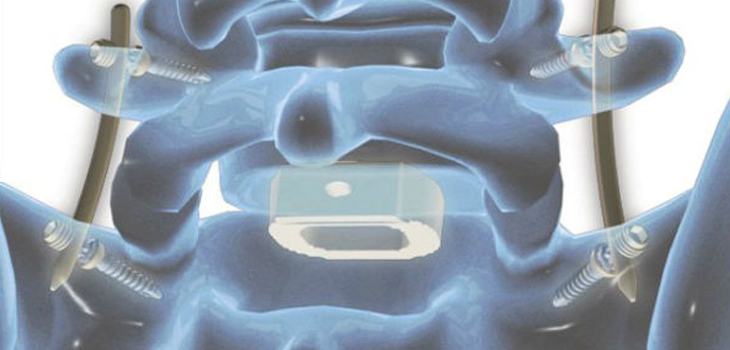
The recent FDA reclassification of semi-rigid spinal stabilization systems from Class III to Class II means that new treatments are on the horizon. One such opportunity may come from UK-based Invibio Biomaterial Solutions, a company that provides PEEK-based biomaterial solutions.
PEEK Rods to Benefit From FDA Reclassification of Spinal Systems?
2 min read Premium comments
Secondary
As indicated in the March 8, 2017 news release, there may be “…a regulatory pathway to 510(k) clearance in the United States for innovative devices using PEEK-OPTIMA polymer based rods from Invibio Biomaterial Solutions (“Invibio”). When compared to rigid systems, semi-rigid PEEK-OPTIMA rods can deliver similar benefits to titanium and are strong enough to stabilize the spine. The FDA decision supports the safety of semi-rigid systems and provides greater options for surgeons who prefer more flexibility than traditional rigid pedicle screw systems to achieve fusion.”
“Invibio collaborated closely with medical device manufacturers and the FDA to provide clinical and biomechanical data in support of the use of semi-rigid PEEK-OPTIMA rods for spinal stabilization. The pioneering development and reclassification is expected to assist the medical profession in achieving progress in enhanced spinal fusion systems and procedures.”
“The down classification of PEEK-OPTIMA rods as a Class II technology for spinal fusion is a welcome and progressive development for the medical device market. Substantial evidence was presented in reaching this conclusion, including data from over 51,000 PEEK rod implantations. We now have a growing body of clinical evidence that systems based on Invibio´s PEEK-OPTIMA rods have clearly defined advantages over all-metal constructs and have the potential to drive the future of posterior spine stabilization,” commented John Devine, Invibio medical business director.
“PEEK-polymer solutions are widely recognized for spinal interbody fusion and are frequently used. The versatile PEEK-OPTIMA has a modulus close to that of human bone, and this allows it to be a natural bridge between very rigid metal implants, such as the titanium constructs, and more dynamic approaches. In fact, PEEK-polymer implants offer numerous benefits, including radiolucency, which of course metals don’t allow, while retaining the stability of titanium,” commented Dr. Thierry Desjardins, neurosurgeon (Cagnes-sur-Mer, France), who has been using PEEK-OPTIMA spinal rods since June 2011 and has always been reluctant to use too rigid a system as this could accelerate degeneration at adjacent spinal segments.
John Devine told OTW, “Spinal rods composed of metal are not without challenges, including, but not limited to, rod breakage, the loosening of screws, and accelerated degeneration at adjacent spinal segments. The high stiffness inherent in all-metal constructs is believed to contribute to these clinical challenges and negatively impact patient outcomes.”
“PEEK-OPTIMA polymer based stabilization, on the other hand, effectively functions as a ‘bridge’ approach. Rods made from the material have sufficient strength to reduce the range of motion in order to stabilize the treated segment, but possessing a modulus similar to that of cortical bone, they still allow physiological movement on adjacent upper and lower segments.”
Author
React:
Discussion
This is a fascinating development. In my practice we've seen similar outcomes with the revised protocol. The key differentiator seems to be patient selection criteria. Has anyone else noticed the correlation with BMI thresholds?
Great point. I'd push back slightly on the conclusion, the sample size in the cited study is too small to draw population-level inferences. That said, the directional signal is compelling and worth a larger RCT.
We implemented a similar approach last year. Early results are promising but we're still gathering 12-month follow-up data. Happy to share our protocol if anyone is interested.
Join the conversation
Orthopedic professionals are discussing this. Sign in and upgrade to read every comment and add your voice.