
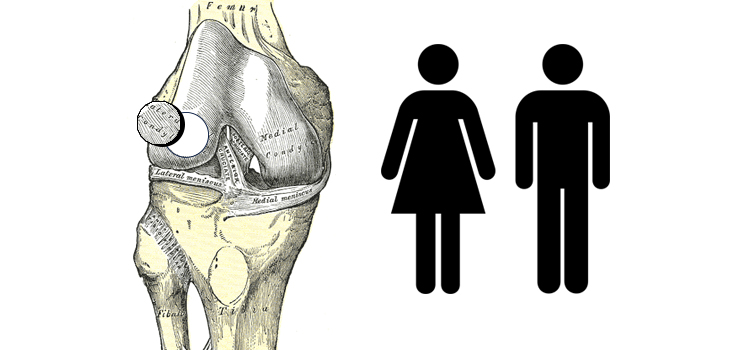
When it comes to osteochondral allograft transplantation (OCA) does it matter if you are 25 or 45? Male or female? Rush researchers wanted to find out.
Osteochondral Allograft Transplantation: Do Age and Sex Matter?
2 min read Premium comments
Secondary
Brian J. Cole, M.D. M.B.A., associate chairman and professor in the Department of Orthopedics at Midwest Orthopaedics at Rush University Medical Center, was a co-author on the prospective study (planned for publication). He told OTW, “Many cartilage studies show that age matters in that patients may not do as well if they are older. My theory was that the issue is not chronology, but physiology. Patients who are older have been living longer with diseased joints and there are probably subtle symptoms that are due to degenerative disease as opposed to localized damage.”
Male and female patients ≥40 years of age undergoing OCA were compared to a cohort of patients <40 who had undergone the same surgery.
The authors wrote, “A total of 170 patients who underwent OCA with an average follow-up of 5.0±2.7 years (range, 2.0-15.1) were included, with 115 patients <40 years (average age 27.6±7.31 years, 58 males, 57 females) and 55 patients ≥40 years (average age 44.9±4.0 years, 33 males, 19 females). There were no differences in the number of pre-OCA surgeries between the groups (P=0.085). There were no differences in reoperation rate (P=0.811), time to reoperation (P=0.315), or failure rate (P=0.561) between the groups. Patients in both groups demonstrated significant improvement in Lysholm, IKCD [International Knee Documentation Committee Subjective Knee Form], KOOS [the Knee injury and Osteoarthritis Outcome Score], WOMAC [Western Ontario and McMaster Universities Osteoarthritis Index], and SF-12 physical outcomes compared to preoperative values (P<0.05 for all for both groups). Patients ≥40 demonstrated significantly higher KOOS-symptom (P=0.015) scores compared to patients <40. There were no significant differences in the number of complications, outcome scores, or time to failure between sexes. Of the failed patients, females <40 years failed significantly earlier than males (P=0.039), while males ≥40 years failed significantly earlier than females (P=0.046).”
Dr. Cole commented to OTW, “We found that male and female patients ≥40 years undergoing OCA have similar survival and reoperation rates at five years to those <40 years of age. It must be noted, however, that careful patient selection is still critical. I am less likely to perform this surgery on someone older than 40, but it can be done if you follow specific inclusion criteria.”
“Those criteria include: weight-bearing pain and subjective complaints over the area of the defect. The problem should be load-related; the alignment should be neutral or perhaps should be corrected prior to a graft. The ligament and meniscal status should be normal, and there should be minimal to no bipolar disease in the affected compartment.”
Author
React:
Discussion
This is a fascinating development. In my practice we've seen similar outcomes with the revised protocol. The key differentiator seems to be patient selection criteria. Has anyone else noticed the correlation with BMI thresholds?
Great point. I'd push back slightly on the conclusion, the sample size in the cited study is too small to draw population-level inferences. That said, the directional signal is compelling and worth a larger RCT.
We implemented a similar approach last year. Early results are promising but we're still gathering 12-month follow-up data. Happy to share our protocol if anyone is interested.
Join the conversation
Orthopedic professionals are discussing this. Sign in and upgrade to read every comment and add your voice.