
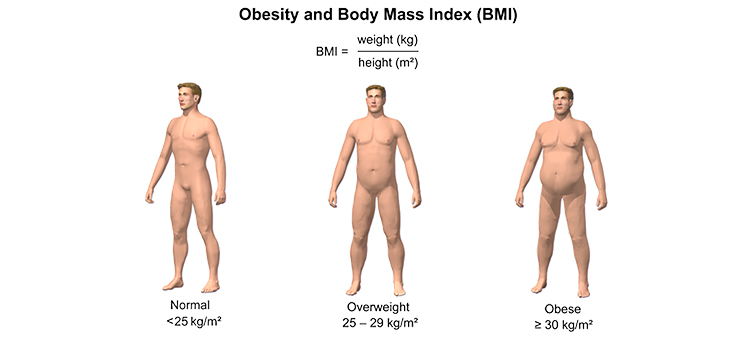
Obese patients in South Cheshire, England, will be refused hip and knee replacement surgery as part of cost-cutting measures proposed by two cash-strapped Clinical Commissioning Groups (CCGs). The CCGs will deny the life-changing operations to patients with a body mass index (BMI) above 35, unless there are exceptional circumstances.
Obese Patients Denied Joint Replacement Surgery
1 min read Premium comments
Secondary
Chief executive of the local Leighton Hospital, Tracy Bullock, disagrees with the cost-cutting measure. “It is about clinical need. If you’ve got a patient whose quality of life can be significantly improved through undertaking such a procedure, then I think they should be given that opportunity,” she told the local newspaper. She was quick to add that patients also needed to take responsibility for their own health, where possible.
“If the NHS [National Health Service] is prepared to spend several thousand pounds on giving you a new hip then it’s in your interest to make sure that you’re in the best position possible to make that effective. So, if you smoke, then stop smoking, if you’re overweight you can lose some weight—because it will be more effective. I do believe patients, somewhere along the line, do have to take responsibility for themselves as well.”
The deficits of the local CCGs amount to millions of pounds, according to the local newspaper, the Crewe Chronicle. Said Councillor Sam Corcoran, “These latest decisions not to carry out operations on obese patients is just the start. The local CCGs are under direction from central government to balance the books and this overrides all other considerations.”
Author
React:
Discussion
This is a fascinating development. In my practice we've seen similar outcomes with the revised protocol. The key differentiator seems to be patient selection criteria. Has anyone else noticed the correlation with BMI thresholds?
Great point. I'd push back slightly on the conclusion, the sample size in the cited study is too small to draw population-level inferences. That said, the directional signal is compelling and worth a larger RCT.
We implemented a similar approach last year. Early results are promising but we're still gathering 12-month follow-up data. Happy to share our protocol if anyone is interested.
Join the conversation
Orthopedic professionals are discussing this. Sign in and upgrade to read every comment and add your voice.