
The burden of femoral fractures in Africa is enormous. And because resources are so scarce, it is imperative that treating physicians have good data regarding what works and what doesn’t. Clinician-researchers from The University of California San Francisco (UCSF) embarked on an important project to nail down the facts.
Novel UCSF Study: Medullary Nailing Lowers Complications
2 min read Premium comments
Secondary
Their unusual study was recently published in the March 1, 2017 edition of The Journal of Bone & Joint Surgery. It was entitled, “Predictors of Reoperation for Adult Femoral Shaft Fractures Managed Operatively in a Sub-Saharan Country.”
Saam Morshed, M.D., Ph.D., M.P.H., is an attending orthopedic trauma surgeon and director of the Clinical Research Center at the UCSF/San Francisco General Hospital Orthopaedic Trauma Institute (OTI).
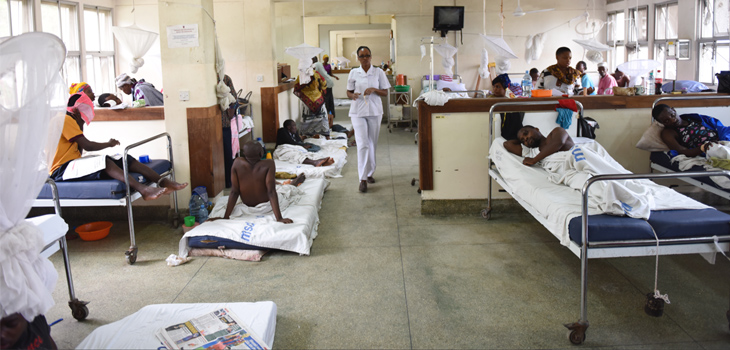
Dr. Morshed told OTW, “This all began with a research course the OTI held for surgeons from low and middle income countries in 2011 and has since [been] conducted annually as part of the Institute for Global Orthopaedics and Traumatology (IGOT) Global Research Initiative. In attendance was a group from Tanzania, who, during a break out session, discussed the enormous burden of femoral fractures at their center.”
“Their center was involved with the SIGN Fracture Care International program and their surgeons wanted to find out whether medullary nailing of femoral fractures could be accomplished with a low rate of complications. At the time the study began, they were doing a fair amount of femoral plating for femoral shaft fractures. We wanted to know if surgery could be done safely and with superior patient-reported outcomes to femoral plating.”
“Working with our Tanzanian colleagues, we designed a prospective cohort study to investigate this topic, something that had never been done in sub-Saharan Africa.”
“The study, conducted at one tertiary care clinic, had a minimum one-year follow up; similar studies were only retrospective chart reviews. There were 331 fractures (329 patients) in the study.”
“We developed a rigorous protocol and ensured that it was followed diligently at each patient’s scheduled follow-up visits.”
“Funding from the Orthopaedic Trauma Association (OTA) and the Orthopaedic Research and Education Foundation (OREF) allowed us to hire and train three local research coordinators. Their attention to data quality and intimate knowledge of the target population was key to the high follow-up rates and success of the study.”
“We were also able to purchase low cost internet-capable personal computers, meaning that all data collection was electronic…something that is rare in sub-Saharan Africa as well as many much more developed settings.”
“The reoperation rate for plate fixation was 25%; for intramedullary nailing it was 5.2%. Our study showed that femoral nailing is indeed a safe treatment in sub-Saharan Africa. An important point is that there are typically delays of a week or more in operative management of these injuries and we strongly believe that reduction in hospital days by themselves will help avoid complications and cost.”
“The broader take home point is that surgery can be considered as a public health intervention. It turns out that that it’s not just a tertiary measure. There are many studies showing surgical interventions are cost effective if not cost saving. We are now working on studying the economic impact of femoral nailing in similar low income countries.”
Author
React:
Discussion
This is a fascinating development. In my practice we've seen similar outcomes with the revised protocol. The key differentiator seems to be patient selection criteria. Has anyone else noticed the correlation with BMI thresholds?
Great point. I'd push back slightly on the conclusion, the sample size in the cited study is too small to draw population-level inferences. That said, the directional signal is compelling and worth a larger RCT.
We implemented a similar approach last year. Early results are promising but we're still gathering 12-month follow-up data. Happy to share our protocol if anyone is interested.
Join the conversation
Orthopedic professionals are discussing this. Sign in and upgrade to read every comment and add your voice.