
There is some good pain relief news from Minnesota-based Zyga Technology, Inc. The company, focused on the minimally invasive treatment of underserved conditions of the lumbar spine with SI joint fusion, has a new study which shows both strong evidence of successful fusion and pain relief.
New Zyga Study: Positive 24-Month SI Fusion Outcomes
2 min read Premium comments
Secondary
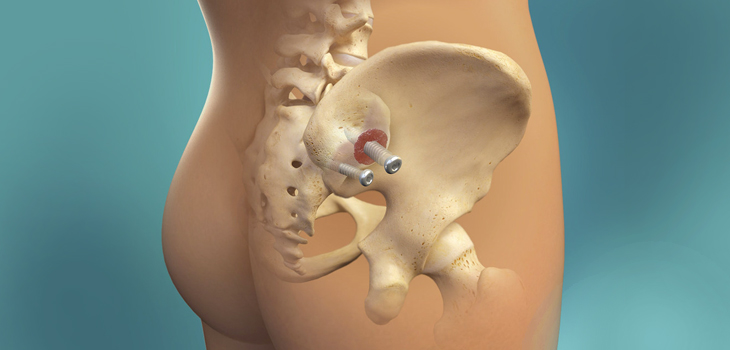
“The study evaluated 18 patients for radiographic evidence of fusion at 12 and 24 months following SI joint fusion with decortication and bone grafting,” indicates the April 13, 2017 news release. “A systematic Computed Tomography (CT) review was predefined and performed by independent radiologists blinded to each other’s assessments. Fusion was defined as Solid (presence of solid continuous bridging bone across the treated joint), Possible (presence of possible continuous bridging bone across the treated joint), or No Fusion (no bridging bone). Previously-reported results demonstrated that 79% of patients had evidence of bridging bone at 12 months.”
“At 24 months post-op 94% of patients had evidence of bridging bone, with 83% categorized as Solid fusion across the SI joint. Of patients with Solid fusion, 88% of the joints were fused within the area of decortication, demonstrating the importance of this step in achieving fusion. In addition to fusion, the study demonstrated a 73% reduction in average pain at 24 months, maintaining the significant pain relief reported at earlier time points. There were no procedure- or device-related serious adverse events reported.”
“Evidence is continually building to support sacroiliac (SI) joint fixation’s ability to effectively reduce pain in patients with SI joint disorders,” said William W. Cross, III, M.D., an orthopedic surgeon specializing in pelvic disorders at Mayo Clinic in Rochester, Minnesota, who presented the data at the International Society for the Advancement of Spine Surgery (ISASS) 2017 Annual Meeting. “This study demonstrates the ability of the SImmetry system to achieve pain reduction comparable to other systems, while providing radiographically evident fusion as early as 12 months and increased fusion rates at 24 months. By supplementing fixation with decortication and bone grafting, I can be confident that my patients have the best possible foundation for biological fusion, and long-term relief.”
Of the yet-to-be-published study Dr. Cross told OTW, “The study was designed to follow current practice standards, so challenges were limited. We appreciated the support of Zyga in compiling and analyzing the data.”
“We found that over 80% of our patients had solid, bridging bone extending from the ilium to the sacrum. In this cohort, clear arthrodesis led to durable pain relief that was present at 12 months and was consistent through 24 months. Our pain relief was significant with average preoperative pain of 8/10 and with surgical treatment and arthrodesis, MIS [minimally invasive surgery] SIJ [sacroiliac joint] fusion led to pain relief scores of 2/10. There were no serious adverse events in this series.”
“Significant and durable pain relief was demonstrated in this study utilizing the readily accepted principles of arthrodesis: joint decortication, bone grafting, and stable fixation.”
Author
React:
Discussion
This is a fascinating development. In my practice we've seen similar outcomes with the revised protocol. The key differentiator seems to be patient selection criteria. Has anyone else noticed the correlation with BMI thresholds?
Great point. I'd push back slightly on the conclusion, the sample size in the cited study is too small to draw population-level inferences. That said, the directional signal is compelling and worth a larger RCT.
We implemented a similar approach last year. Early results are promising but we're still gathering 12-month follow-up data. Happy to share our protocol if anyone is interested.
Join the conversation
Orthopedic professionals are discussing this. Sign in and upgrade to read every comment and add your voice.