
CBSET, Inc. a not-for-profit preclinical research institute based in Lexington, Massachusetts, has announced the publication of safety and efficacy data at one year showing that percutaneous intramedullary fixation can provide for stabilization of bone fractures while avoiding open surgery. Results of this study, entitled, “Biocompatibility, bone healing, and safety evaluation in rabbits with an IlluminOss bone stabilization system,” were published February 20, 2017 in the Journal of Orthopaedic Research.
New Results on Safety, Efficacy of IlluminOss System
2 min read Premium comments
Secondary
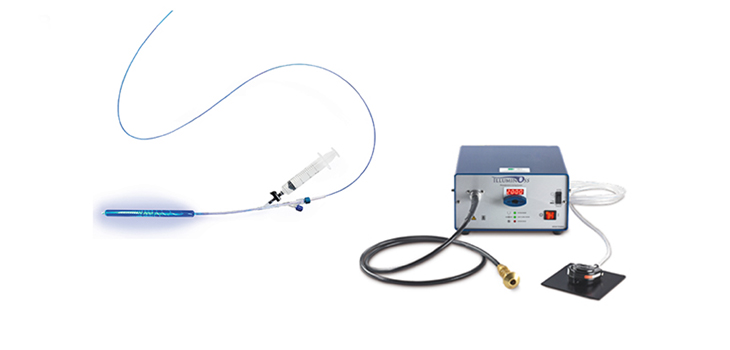
“Our study further evaluates the percutaneous application of the IlluminOss System, which is a light-curable photodynamic bone stabilization device developed by IlluminOss Medical, Inc. as a safe and biocompatible treatment for fracture stabilization and repair in load-bearing bones, such as the long bones of the leg,” said co-investigator Brett G. Zani, Ph.D., director of Applied Sciences, CBSET, in the March 23, 2017 news release.
“Local biocompatibility evaluations comparing the IlluminOss System to standard K-wire implants showed no significant long-term local tissue reactions associated with either implant, and good systemic biocompatibility of the IlluminOss System over the course of a year,” added co-investigator and CBSET scientist Amanda L. McSweeney.
According to the news release, “The implant begins as a liquid monomer that is completely contained within a Dacron or PET [polyethylene terephthalate] balloon. Once inside a patient’s bone, it conforms to the geometry of that patient’s intramedullary canal, whereas traditional rigid intramedullary rods have only small discrete contact points. Now, international surgeons have the option to use the IlluminOss product alone or in conjunction with traditional hardware and screws for multiple types of fractures.”
Robert Rabiner, founder and chief technical officer of IlluminOss Medical, told OTW, “The perceived product utility and the multiple clinical applications that we saw in the lab were similarly recognized by our early surgeon-users. The early adopters of IlluminOss were able to quickly grasp not only the utility of the product, but also to be able to implement it directly into their clinical practice and become the standard of care for many of them.”
“Not only were we rewarded with sustained utilization of the product, but we were able to become a valuable tool in their surgical armamentarium in treating fractures of highly compromised bone. In fact 34% of the patients initially treated were ‘redo’ patients where conventional products had failed.”
“Based upon the tremendous and ongoing commercial success that we have obtained with the product in Europe and the recent completion of our U.S. clinical trial, I would hope that a year from now we will have achieved approval to initiate commercialization in the U.S. and to bring this incredibly valuable product to the U.S. market.”
The IluminOss System is approved for sale in Europe and for investigational use in the U.S.
Author
React:
Discussion
This is a fascinating development. In my practice we've seen similar outcomes with the revised protocol. The key differentiator seems to be patient selection criteria. Has anyone else noticed the correlation with BMI thresholds?
Great point. I'd push back slightly on the conclusion, the sample size in the cited study is too small to draw population-level inferences. That said, the directional signal is compelling and worth a larger RCT.
We implemented a similar approach last year. Early results are promising but we're still gathering 12-month follow-up data. Happy to share our protocol if anyone is interested.
Join the conversation
Orthopedic professionals are discussing this. Sign in and upgrade to read every comment and add your voice.