
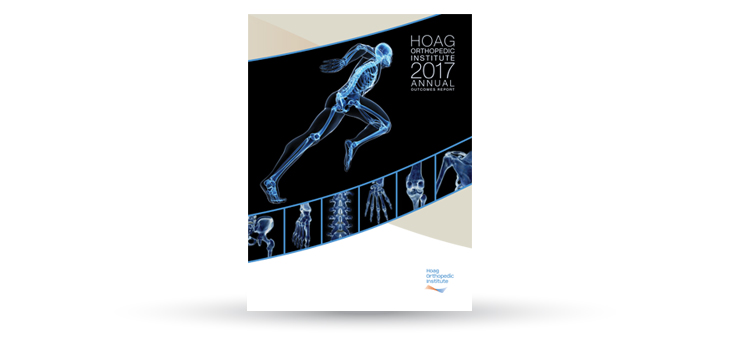
Orange County California’s Hoag Orthopedic Institute (HOI), just released its 2017 Outcomes Report. In it, readers can find information regarding HOI’s previous year’s surgical volumes, care quality metrics, infection and readmission rates, and patient satisfaction scores.
Hospital With Lowest Readmission Rate Shares More Data
2 min read Premium comments
Secondary
HOI has performed the most joint replacements in California for five consecutive years. It has also had the lowest readmission rate in the nation for hip and knee replacements from 2012 through 2015.
In addition to the data on infection rates and volume, the report also highlights quality improvement initiatives, distinctions and innovations, details on HOI’s education and research program, compelling patient testimonials, and much more.
“Our quest to provide greater value and optimize outcomes in musculoskeletal care unfolds in this issue of our annual outcomes report,” said Sopida Andronaco, R.N., director of Performance Improvement and Clinical Outcomes for HOI. “The entire HOI staff works tirelessly to continually reach this exemplary level of excellence and we are proud to showcase their dedication and commitment to delivering quality care to our patients.”
“Hoag Orthopedic Institute is the highest volume provider of hip and knee replacements in California, says the April 12, 2017 news release. “It is one of only 102 hospitals nationwide to receive a top, five-star quality rating from Centers for Medicare and Medicaid Services (CMS) in 2016. HOI has also had the lowest readmission rate in the nation for hip and knee replacements from 2012 through 2015.”
Dr. Robert Gorab, chief medical officer of Hoag Orthopedic Institute, commented to OTW, “High quality care, value and transparency are the core elements of the Hoag Orthopedic Institute culture and ethos. We pride ourselves on the work that we do, and consider it a privilege to showcase the change we’re driving in the delivery of orthopedic care. We have been the pioneers of many innovations at HOI, including our annual Outcomes Reports, which plainly lay all our data on the table for both consumers and other stakeholders to review and analyze. Our innovative drive has also led us to make extended efforts to further improve orthopedic care—we have bolstered Hoag Orthopedics, our non-profit arm focused on fostering education for faculty, fellows and the community, and medical research in orthopedic medicine. Currently at Hoag Orthopedics, we have 30 research studies ranging from cartilage repair, to the effects of narcotic use following knee surgery. We’re confident that much positive change will emanate from our robust research teams.”
Author
React:
Discussion
This is a fascinating development. In my practice we've seen similar outcomes with the revised protocol. The key differentiator seems to be patient selection criteria. Has anyone else noticed the correlation with BMI thresholds?
Great point. I'd push back slightly on the conclusion, the sample size in the cited study is too small to draw population-level inferences. That said, the directional signal is compelling and worth a larger RCT.
We implemented a similar approach last year. Early results are promising but we're still gathering 12-month follow-up data. Happy to share our protocol if anyone is interested.
Join the conversation
Orthopedic professionals are discussing this. Sign in and upgrade to read every comment and add your voice.