
It doesn’t happen often, but when it does it can be fatal…fluid extravasation (leakage) during hip arthroscopy.
Fluid Extravasation in Hip Arthroscopy: What to Look For
2 min read Premium comments
Secondary
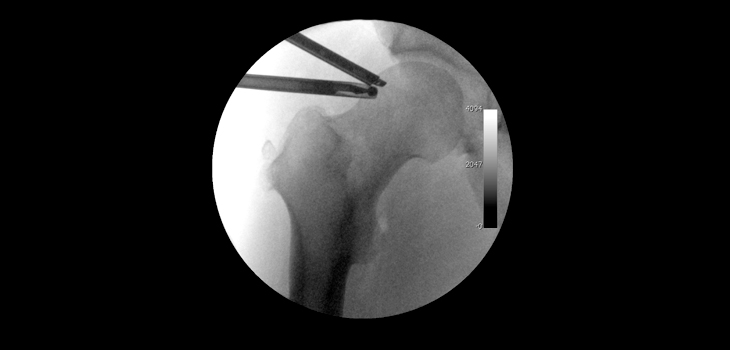
Published in the April 2017 edition of Arthroscopy, “Fluid Extravasation in Hip Arthroscopy: A Systematic Review,” takes a look at the commonalities between cases of fluid extravasation and what can be done.
Olufemi Ayeni, M.D. is with the division of Orthopaedic Surgery at McMaster University in Ontario, Canada. A co-author on the study, Dr. Ayeni old OTW, “This investigation was pursued to evaluate surgical risks associated with hip arthroscopy as it is a rapidly growing field in orthopaedic surgery.”
The researchers examined 14 studies and found 22 occurrences of symptomatic fluid extravasation in 21 patients. They write, “Two studies of normal fluid extravasation in asymptomatic patients reported 1.13 to 3.06 L of extravasated fluid observed on computed tomography. Nine case studies were included, which provided detailed patient and surgical information. Of these 9 patients (10 cases) with a mean age of 38.2 years old (range, 15 to 55 years), 6 were female. Signs of fluid extravasation included abdominal distension (89%), hypothermia (56%), hypotension. and metabolic acidosis (33% each). Four patients required surgical intervention, while 3 underwent paracentesis. Two patients were managed conservatively. All patients stabilized and were discharged, with one patient reporting abdominal complaints at latest follow-up (length of follow-up unspecified).”
Dr. Ayeni commented to OTW, “The most important finding is that fluid extravasation is a rare (potentially fatal) complication but prompt recognition and management can lead to favorable outcomes for the patient. Although there were no surprising findings, surgeons should be aware of this potential complication and should have a high index of suspicion when a patient presents with the following: distended abdomen (during or after case), altered vital signs such as hypotension, hypothermia and changes in heart rate. Anesthesia and surgical teams must work together to resolve promptly once diagnosed.”
“It’s challenging to recognize because signs and symptoms can be variable. Treatment is challenging as it involves consultations and/or procedures other specialists such as intensivists, general surgeons and internists.”
“Surgeons and anesthesiologists should communicate about the ‘telltale’ signs of such a complication prior to surgery so that awareness in increased. A post surgical check for abdominal distension and changes in vitals signs should be documented and communicated amongst all participants in surgery.”
Author
React:
Discussion
This is a fascinating development. In my practice we've seen similar outcomes with the revised protocol. The key differentiator seems to be patient selection criteria. Has anyone else noticed the correlation with BMI thresholds?
Great point. I'd push back slightly on the conclusion, the sample size in the cited study is too small to draw population-level inferences. That said, the directional signal is compelling and worth a larger RCT.
We implemented a similar approach last year. Early results are promising but we're still gathering 12-month follow-up data. Happy to share our protocol if anyone is interested.
Join the conversation
Orthopedic professionals are discussing this. Sign in and upgrade to read every comment and add your voice.