
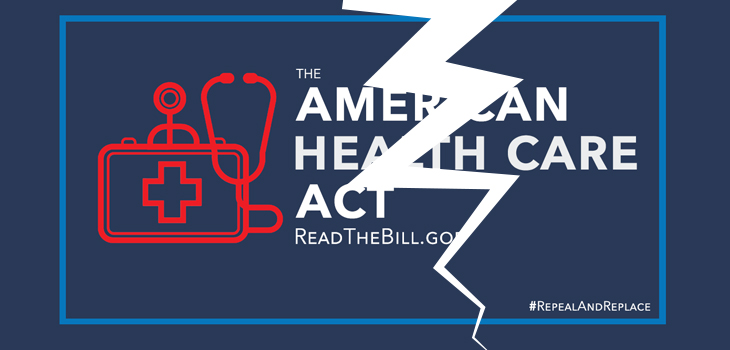
The failure to repeal and replace the Affordable Care Act (ACA) with the American Health Care Act (AHCA) was a good thing for medical device companies.
Failure to Repeal Obamacare Good for Device Industry
2 min read Premium comments
Secondary
Wells Fargo Analyst Larry Biegelsen offered that assessment on March 29, 2017 after hosting a conference call with investors and Vince Ventimiglia, a former Republican congressional staffer and assistant secretary for legislation at the Department of Health and Human Services. Ventimiglia is currently vice chairman of Leavitt Partners.
Procedure Volumes
Biegelsen’s logic is simple and based on anticipated procedure volumes. He cites the Congressional Budget Office analysis of the AHCA, which predicted that 14 million to 24 million people would lose their insurance to pay for procedures between 2018 and 2026. This would have negatively impacted procedure volume in the U.S.
As James Carville might have said, “It’s all about the volume, stupid.”
But now what?
Ventimiglia told Wells Fargo’s investors that while Obamacare will stay in place, the administration can make changes through various rulemakings, executive actions and smaller legislative efforts to address specific provisions in the ACA. Some changes could be to modify risk adjustment formulas and the medical loss ratio (MLR) definitions, tightening special enrollment period (SEP) controls to stabilize risk populations, continue cost sharing reduction (CSR) funding and other steps to shore up health insurance exchanges (HIE).
Health Exchanges
What about the Presidential Tweets predicting the collapse of the individual state healthcare exchanges?
Ventimiglia pointed out that 25-30 states have stable exchanges with respect to enrollment churn, plan options and the makeup of networks. He said it is possible these states will increase enrollment in 2018. For states with unstable exchanges like Tennessee, a fix is needed or insurers are likely to exit in 2018.
Medtech Device Tax
Ventimiglia said a repeal of the device tax has bipartisan support but finding the source of funding and a legislative vehicle may be difficult in the current environment. A one- to two-year delay of that tax is more likely while Congress searches for a vehicle for permanent repeal.
Payment Models Remain
The environment for alternative payment methods that are moving government reimbursement from a fee-for-service model to a pay-for-performance model is likely to stick around, said Ventimiglia, although the mandatory nature of the current law may become discretionary.
Ventimiglia believes the funding mechanism of the Centers for Medicare and Medicaid Innovation (CMMI) will ultimately be converted from mandatory to discretionary. However, he sees increasing bipartisan support for the robust authority of the CMMI and that payment model innovation is an important cost-saving mechanism. He says HHS Secretary Tom Price, M.D., is also increasingly supportive of payment reform but opposes mandatory models.
Ventimiglia sees no interest in delaying the Medicare Access and CHIP Reauthorization Act (MACRA), which replaced the Sustainable Growth Rate formula. However, he says the provider community remains concerned about MACRA moving forward.
Congress has decided not to act. Obamacare will stay for now. Procedure volumes will likely remain stable and alternative payment models will remain to reward those who figure out how to do things cheaper and better. Gawkers can move along. There’s nothing to see here.
Author
React:
Discussion
This is a fascinating development. In my practice we've seen similar outcomes with the revised protocol. The key differentiator seems to be patient selection criteria. Has anyone else noticed the correlation with BMI thresholds?
Great point. I'd push back slightly on the conclusion, the sample size in the cited study is too small to draw population-level inferences. That said, the directional signal is compelling and worth a larger RCT.
We implemented a similar approach last year. Early results are promising but we're still gathering 12-month follow-up data. Happy to share our protocol if anyone is interested.
Join the conversation
Orthopedic professionals are discussing this. Sign in and upgrade to read every comment and add your voice.