
Will using technology to keep patients involved in rehab work? CyMedica Orthopedics, Inc. hopes so.
CyMedica: First Patient Enrolled in Trial for Knee Rehab
2 min read Premium comments
Secondary
The Scottsdale, Arizona based company has announced that it has enrolled its first patient in a clinical trial to test the effectiveness of a new app for post-operative knee rehabilitation.
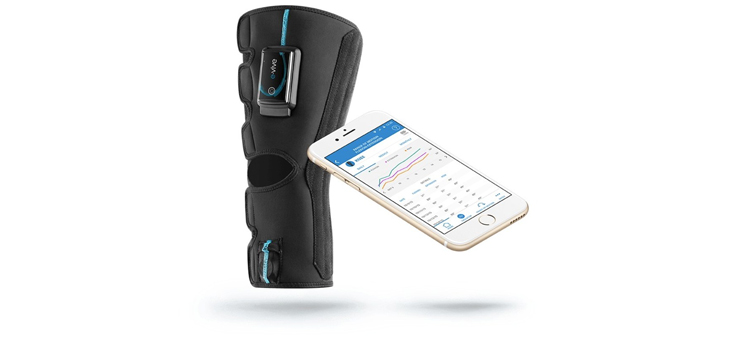
The app is called the e-vive neuro-muscular muscle activation/patient engagement system and it is designed to be used in post-operative primary total knee arthroplasty rehabilitation. The study’s hypothesis is that this system will reduce associated post-acute care costs.
According to the April 4, 2017 news release, the app is “designed to deliver wireless, app-controlled muscle stimulation therapy individualized for each patient’s comfort and convenience, e-vive helps keep patients engaged with their rehab by tracking their progress and allowing data sharing with clinicians.”
“This clinical trial will allow us to accelerate what we believe is an essential shift in the care model for total knee post-surgical rehabilitation,” said Rob Morocco, president and CEO, CyMedica.
“As bundled programs and the healthcare models evolve, orthopedic surgeons will continue to be advocates for better post-surgical rehabilitation innovations that engage patients in their care and provide more efficient ways to provide these services. At Cleveland Clinic, we are constantly looking for options that allow doctors and their rehabilitation partners to put patients first. The goal of this research is to help the orthopedic and physical therapy communities give better care,” said Carlos Higuera-Rueda, M.D., orthopedic surgeon at Cleveland Clinic and primary investigator.
Rob Morocco told OTW, “We are very excited to enter into clinical collaboration with the Cleveland Clinic Foundation, a globally recognized healthcare leader and innovator. This relationship will allow us to accelerate what we believe is an essential shift in the post-operative rehabilitation care in value based care models.”
“CyMedica is relentlessly focused on helping physicians and physical therapists by delivering advanced tele-rehab muscle activation solutions that offer healthcare providers better visibility and insight into their patient’s progress—to raise the standard of care, improve the population health, and reduce costs for healthcare.”
Physical therapist Gary Calabrese, D.P.T. senior director, Rehabilitation and Sports Therapy at the Cleveland Clinic, commented to OTW, “The goal of rehabilitation is to return the patient to full functional status as soon as safely possible after surgery. The standard of care has always included improving quadriceps strength which is crucial in the recovery of the patient. Quadriceps strength has been documented to be reduced up to 50% of the patient’s pre-operative level. This decrease in voluntary muscle activation of the quadriceps can negatively impact the early functional status of our TKA [total knee arthroplasty] patients. Therefore utilizing modalities such as neuromuscular electrical stimulation (NMES) can assist in developing a new standard of care in the recovery of total knee replacement patients.”
Author
React:
Discussion
This is a fascinating development. In my practice we've seen similar outcomes with the revised protocol. The key differentiator seems to be patient selection criteria. Has anyone else noticed the correlation with BMI thresholds?
Great point. I'd push back slightly on the conclusion, the sample size in the cited study is too small to draw population-level inferences. That said, the directional signal is compelling and worth a larger RCT.
We implemented a similar approach last year. Early results are promising but we're still gathering 12-month follow-up data. Happy to share our protocol if anyone is interested.
Join the conversation
Orthopedic professionals are discussing this. Sign in and upgrade to read every comment and add your voice.