
It is happening slowly but surely as scientists are demonstrating they can 3D print tissues or organs and successfully implant them in a living human being.
3D Printed Cells Survive in Living Bodies
1 min read Premium comments
Secondary
According to Clare Scott, a writer for 3D Print Board.com, it is now possible to 3D print tissue that can survive and grow within animals. Blood vessels have been printed and implanted into rhesus monkeys and in mice. Two Swedish universities have gotten 3D printed human cartilage cells to survive and grow inside an animal.
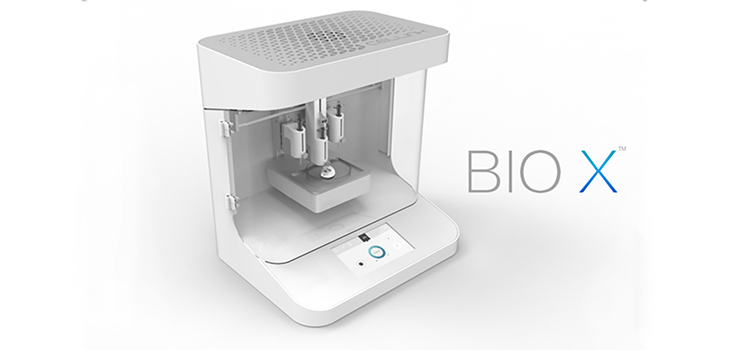
Paul Gatenholm,, Ph.D., a professor of biopolymer technology at Chalmers University of Technology in Gotenburg, Sweden, adjunct professor of biomaterial engineering at Virginia Polytechnic Institute in Blacksburg, Virginia, and the co-founder of CELLINK, used a CELLINK bioprinter to 3D print a construct formed from hydrogel mixed with human cartilage cells. The construct was immediately implanted in mice.
Not only did the cartilage tissue survive and grow, it vascularized, formed its own blood vessels.
The fact that it was implanted into the mice immediately after printing was significant. In previous studies researchers had grown the cartilage for a time in the lab before implanting it. Lars Kölby, M.D., Ph.D., senior lecturer at Sahlgrenska Academy and specialist consultant with the Department of Plastic Surgery at Sahlgrenska University Hospital described the formation of structures in bioprinted tissue.
“What we see after 60 days is something that begins to resemble cartilage. It is white and the human cartilage cells are alive and producing what they are supposed to,” he said. “We have also been able to stimulate the cartilage cells by adding stem cells, which clearly promoted further cell division.”
According to Kölby, much of the project’s success is due to the collaboration between scientists of different disciplines.
“Often, it is like this: we clinicians work with problems and researchers work with solutions,” he said. “If we can come together, there is a chance of actually solving some of the problems we are wrestling with—and in this way, patients benefit from the research.”
Author
React:
Discussion
This is a fascinating development. In my practice we've seen similar outcomes with the revised protocol. The key differentiator seems to be patient selection criteria. Has anyone else noticed the correlation with BMI thresholds?
Great point. I'd push back slightly on the conclusion, the sample size in the cited study is too small to draw population-level inferences. That said, the directional signal is compelling and worth a larger RCT.
We implemented a similar approach last year. Early results are promising but we're still gathering 12-month follow-up data. Happy to share our protocol if anyone is interested.
Join the conversation
Orthopedic professionals are discussing this. Sign in and upgrade to read every comment and add your voice.