
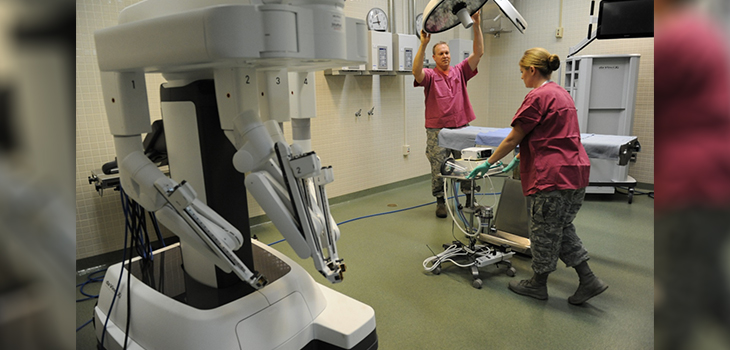
According to a survey of U.S. orthopedic surgeons by RBC Capital Markets, LLC, 2017 will see an increased demand for new robotics systems for the hip and the knee.
U.S. Orthopedic Surgeons: 2017, the Year of Robotics
1 min read Premium comments
Secondary
Glenn Novarro, an analyst for RBC Capital Markets, reported that about 31% of the surgeons surveyed are trained on robotics for hip and knee robotic systems and another 8% plan on being trained in the next 24 months. The number of robotic systems is expected to grow from around 31 to 42 systems and surgeons are expecting to see approximately an 82% growth in their robotic hip/knee procedures in 2017, with the fastest growth in total and partial knees. Stryker’s MAKO is predicted to capture almost 90% of the U.S. robotic hip/knee market.
Other key findings of the survey include:
- First Quarter 2017 of the U.S. reconstructive market will be down about 4% with only about 43% of surgeons reporting being busy during the first quarter of 2017.
- U.S. orthopedic surgeons expect an overall stable U.S. reconstructive market in 2017 with an estimated 5% hip/knee volume CAGR (Compound Annual Growth Rate) over the next two years.
- Stryker is expected to gain more of the hip/knee market, while Zimmer Biomet Holdings Inc. and Johnson & Johnson will lose market shares.
- Orthopedic surgeons also expect a continued move toward outpatient surgery, especially for partial knee reconstruction.
- Surgeons are being more cautious about performing hip/knee surgery on high risk patients due to greater participation in the Comprehensive Care for Joint Replacement program.
Author
React:
Discussion
This is a fascinating development. In my practice we've seen similar outcomes with the revised protocol. The key differentiator seems to be patient selection criteria. Has anyone else noticed the correlation with BMI thresholds?
Great point. I'd push back slightly on the conclusion, the sample size in the cited study is too small to draw population-level inferences. That said, the directional signal is compelling and worth a larger RCT.
We implemented a similar approach last year. Early results are promising but we're still gathering 12-month follow-up data. Happy to share our protocol if anyone is interested.
Join the conversation
Orthopedic professionals are discussing this. Sign in and upgrade to read every comment and add your voice.