
TheraCell Inc., headquartered in Los Angeles, has announced the second patent for its demineralized bone fiber (DBF) by the U.S. Patent and Trademark Office. As indicated in the March 9, 2017 news release, “TheraCell’s DBF technology is incorporated into two innovative demineralized cortical fiber allograft, AlloFuse Cortical Fibers and AlloFuse Fiber Boat, commercialized by AlloSource….”
TheraCell: Second Patent for DBF
1 min read Premium comments
Secondary
“This second patent shows TheraCell’s dedication to advancing the science behind demineralized bone fiber allografts,” said AlloSource Chief Commerical Officer Kerr Holbrook. “Including this patented technology in AlloSource’s product portfolio is important to providing our surgeon customers solutions to help patients in need, while continuing to fully honor our tissue donors.”
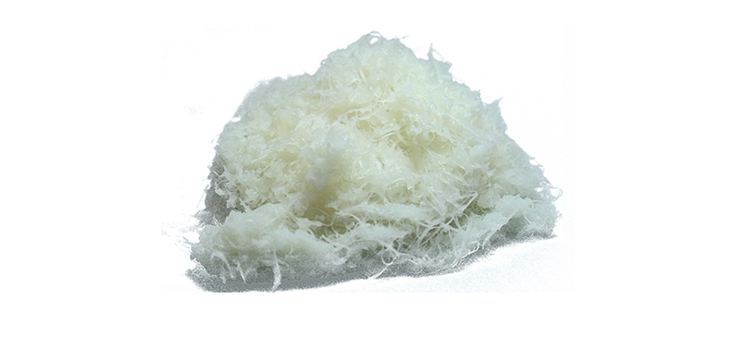
Andy Carter, Ph.D. is chief technology officer at TheraCell. He told OTW, “Our process is highly efficient and yields uniform fibers that are both osteoinductive and osteoconductive, and the ‘cotton wool’ like properties means that there are no additives so the implant is pure demineralized bone. The DBF can be treated like textile fibers and processed to make shapes such as the Fiber Boat product. This provides ease of handling and use for spine surgeons doing posterolateral fusions.”
“Studies have shown good bone healing in a range of animal models and the product is now commercially available through AlloSource.”
Author
React:
Discussion
This is a fascinating development. In my practice we've seen similar outcomes with the revised protocol. The key differentiator seems to be patient selection criteria. Has anyone else noticed the correlation with BMI thresholds?
Great point. I'd push back slightly on the conclusion, the sample size in the cited study is too small to draw population-level inferences. That said, the directional signal is compelling and worth a larger RCT.
We implemented a similar approach last year. Early results are promising but we're still gathering 12-month follow-up data. Happy to share our protocol if anyone is interested.
Join the conversation
Orthopedic professionals are discussing this. Sign in and upgrade to read every comment and add your voice.