
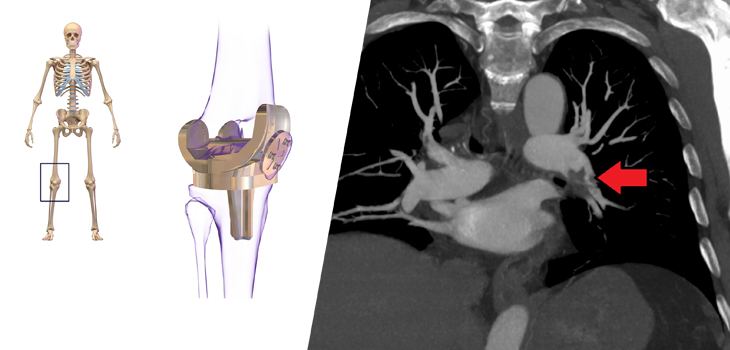
New research from the Departments of Orthopaedic Surgery and Anesthesiology at Rush University Medical Center in Chicago set out to compare aspirin, rivaroxaban, and warfarin in preventing venous thromboembolism (VTE) after primary total joint arthroplasty (TJA). The work, presented at the recent meeting of The American Academy of Orthopaedic Surgeons, was a retrospective review of 1,361 patients who underwent primary total hip or knee arthroplasty at Rush.
Rush Study: Aspirin, Rivaroxaban, Warfarin Equal in VTE Prevention
1 min read Premium comments
Secondary
According to the presentation, a total of 500 patients (36.7%) received aspirin, 460 (33.8%) received rivaroxaban, and 401 (29.4%) received warfarin. Patients were excluded if they underwent bilateral TJA, had incomplete data, or received other anticoagulants. Patients receiving rivaroxaban demonstrated higher estimated blood loss intraoperatively and greater transfusion rates (2+ units) during the perioperative period. The patients who received aspirin experienced lower procedural times and shorter postoperative length of stay than those in the rivaroxaban or warfarin groups
Brett Levine, M.D., M.S. is an assistant professor at Rush and a co-author on the study. He told OTW, “This is a large retrospective study comparing ASA [aspirin], Xarelto and Coumadin; I’m not sure these three agents have been compared before from a single institution.”
“It was surprising that DVT [deep vein thrombosis] and VTE rates were similar regardless of the prophylaxis we used. While the aspirin group was a bit healthier cohort, all are equally effective in preventing PE [pulmonary embolism] and DVT [deep vein thrombosis] after TKA [total knee arthroplasty] and THA [total hip arthroplasty].”
“To my colleagues I would say, ‘Use the DVT prophylaxis you are comfortable with as all appear to equally effective in these cohorts.’”
Author
React:
Discussion
This is a fascinating development. In my practice we've seen similar outcomes with the revised protocol. The key differentiator seems to be patient selection criteria. Has anyone else noticed the correlation with BMI thresholds?
Great point. I'd push back slightly on the conclusion, the sample size in the cited study is too small to draw population-level inferences. That said, the directional signal is compelling and worth a larger RCT.
We implemented a similar approach last year. Early results are promising but we're still gathering 12-month follow-up data. Happy to share our protocol if anyone is interested.
Join the conversation
Orthopedic professionals are discussing this. Sign in and upgrade to read every comment and add your voice.