
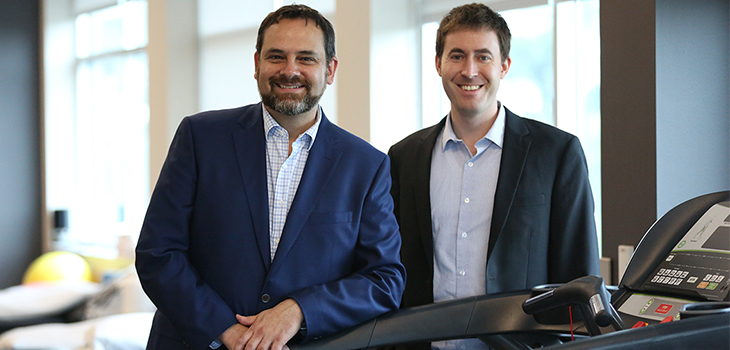
The Sports Neurology Clinic at The CORE Institute in Plymouth, Michigan, is teaming up with Barwis Methods, a sports training company that specializes in holistic human performances to offer both brain health and sports performance expertise all in one location.
Michigan Sports Clinic Teams Up With Barwis Methods
1 min read Premium comments
Secondary
To do that, The Sports Neurology Clinic will soon be opening a new clinic at Barwis Methods, also based in Plymouth. This will the clinic’s third location in Michigan. Currently The Sports Neurology Clinic operates out of the CORE Institute in Brighton and at Bronson Healthcare in Kalamazoo.
The Sports Neurology Clinic is led by sports neurologist Jeffrey Kutcher, M.D., a nationally known expert on athletes’ brain health. He said in a press release, “The brain health of all athletes is a serious health concern. Our providers address the entire spectrum of neurologic care in athletes, placing unique emphasis on maximizing brain health over the course of a lifetime.”
He added, “Partnering with Mike Barwis and his staff allows us an exceptional opportunity to offer an unmatched level of care to athletes of every level. We could not be more excited about what this relationship will mean for our patients.”
Mike Barwis, CEO & Founder, Barwis Methods, also said in the release that this new partnership continues the Barwis Methods’ tradition of taking a “cutting edge scientific approach to human performance.”
He said, “It allows us to blend the world’s premier performance training program with the world’s top brain health team and makes our location in Plymouth a one-of-a-kind institute for health.”
The Sports Neurology Clinic and Barwis Methods will host an open house on April 11, 2017 from 11 a.m. to 1 p.m. to welcome the neighboring communities to tour the facility and learn about the brain health and sports performance services offered there.
Author
React:
Discussion
This is a fascinating development. In my practice we've seen similar outcomes with the revised protocol. The key differentiator seems to be patient selection criteria. Has anyone else noticed the correlation with BMI thresholds?
Great point. I'd push back slightly on the conclusion, the sample size in the cited study is too small to draw population-level inferences. That said, the directional signal is compelling and worth a larger RCT.
We implemented a similar approach last year. Early results are promising but we're still gathering 12-month follow-up data. Happy to share our protocol if anyone is interested.
Join the conversation
Orthopedic professionals are discussing this. Sign in and upgrade to read every comment and add your voice.