
A new technology device that tracks an athlete’s eyes to detect a head injury is being tested in an Atlantic City mixed martial arts competition and also in a boxing championship in Newark later this spring, according to Lindy Washburn, a writer for North Jersey.com.
Eye Test May Diagnose Concussions
1 min read Premium comments
Secondary
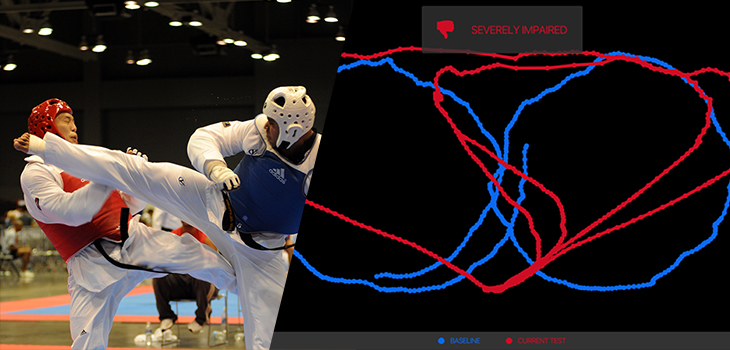
The device, called the EyeGuide Focus, uses a camera to record the action of an athlete’s eyes as they track a cursor that traces a sideways figure 8 on a computer screen. Fighters will take the 10 second test as part of their pre-game physical and then take it again immediately after the fight ends.
Michael Kelly, M.D., an internal and sports-medicine specialist who practices in West Orange and is a ringside physician, said that the test has potential for use in other contact sports besides boxing. “It’s a fascinating new way of approaching concussions,” he said, adding that doctors, for 20 or 30 years, have noticed changes in eye motion following blows to the head. The test tracks eye movements 60 times a second, according to its manufacturer. Washburn notes that the EyeGuide Focus is not considered a medical device, and therefore none of EyeGuide, Inc.’s claims has been evaluated by the federal Food and Drug Administration.
Author
React:
Discussion
This is a fascinating development. In my practice we've seen similar outcomes with the revised protocol. The key differentiator seems to be patient selection criteria. Has anyone else noticed the correlation with BMI thresholds?
Great point. I'd push back slightly on the conclusion, the sample size in the cited study is too small to draw population-level inferences. That said, the directional signal is compelling and worth a larger RCT.
We implemented a similar approach last year. Early results are promising but we're still gathering 12-month follow-up data. Happy to share our protocol if anyone is interested.
Join the conversation
Orthopedic professionals are discussing this. Sign in and upgrade to read every comment and add your voice.