
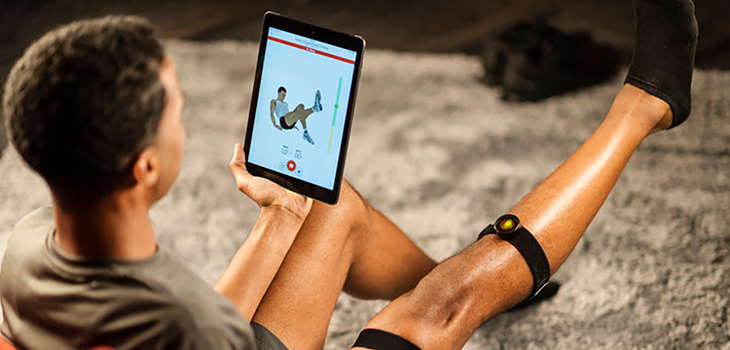
Carlsbad, California-based Breg, Inc. has announced the launch of Breg Flex, a portable device with a chargeable Bluetooth wireless sensor that allows for the optimization of in-home care. As indicated in the March 6, 2017 news release, “Breg Flex makes at-home physical therapy (PT) more convenient and engaging for patients which promotes protocol adherence, resulting in the potential to improve outcomes, reduce costs and provide a better patient experience.”
Breg Launches Wearable Sensor+App for At-Home Recovery
2 min read Premium comments
Secondary
“Our beta program revealed that Breg Flex has the potential to improve overall patient outcomes. It found that Breg Flex patients achieved their optimal outcome using 25% less visits than non-Breg Flex patients in the same diagnosis group,” said Daniel Segina, M.D., a nationally recognized orthopedic trauma surgeon based in Rockledge, Florida. “Breg Flex patients scored 20% higher on their functional improvement scores than non-Breg Flex patients, on average. Additionally, Breg Flex patients were 75% compliant with their therapy protocols (vs. an average of 30% for non-Breg Flex patients), and reported a satisfaction level of 90%, on average.”
Regarding the development process, Brad Lee, Breg president and CEO, told OTW, “Early in the concept phase of Breg Flex, we looked at a camera-based platform to capture patient movement. We quickly realized it wasn’t the best option, and chose to focus on sensors for two reasons. First, sensors quantify and measure patient movement more accurately than cameras. Second, it was important for patients to have complete mobility and not restricted by a camera tied to a game console and television. The point of rehabilitation, after all, is getting patients back to activity, and wearable sensor technology supports that goal. Patients can take Breg Flex therapy with them wherever they go and use it at any time. During the beta program, there were two patients who took Breg Flex with them on vacation so they could continue their rehab—that’s hard to do with a console. Using sensors also allows us to continue advancing the technology in ways that outstrip a camera tied to a game console and television. For example, the ability to monitor a patient’s gait will require unencumbered mobility.”
“A little over a year ago, we began a Beta program with Therapeutic Associates Bend Physical Therapy in Bend, Oregon. Going into the beta program, we expected to find Breg Flex would improve compliance leading to better outcomes and lower costs. While we also thought Breg Flex would have a positive impact on patient experience, we were pleasantly surprised by the extent of their reaction. They described feeling more connected to their providers—not so alone and ‘on their own.’ Patients said they felt better cared for. That’s when we knew we had something.”
As for marketing/sales plans, Lee told OTW, “We are introducing Breg Flex at the upcoming American Academy of Orthopaedic Surgeons (AAOS) meeting in San Diego, March 15-17, 2017. This new technology will be featured and demonstrated in Breg’s booth, #4623. Because Breg Flex is a complete tool that addresses value-based care initiatives, we are focused on partnering with leading organizations that are participating in the value-based environment of Comprehensive Care for Joint Replacement (CJR), Bundled Payments for Care Improvement (BPCI) and the Accountable Care Organization (ACO) model.”
Author
React:
Discussion
This is a fascinating development. In my practice we've seen similar outcomes with the revised protocol. The key differentiator seems to be patient selection criteria. Has anyone else noticed the correlation with BMI thresholds?
Great point. I'd push back slightly on the conclusion, the sample size in the cited study is too small to draw population-level inferences. That said, the directional signal is compelling and worth a larger RCT.
We implemented a similar approach last year. Early results are promising but we're still gathering 12-month follow-up data. Happy to share our protocol if anyone is interested.
Join the conversation
Orthopedic professionals are discussing this. Sign in and upgrade to read every comment and add your voice.