
The FDA has given Zimmer Biomet Holdings, Inc. permission for an expanded 26-week efficacy claim for its single-injection viscosupplement Gel-One Cross-linked Hyaluronate for the treatment of knee pain associated with osteoarthritis.
Zimmer Biomet’s Gel-One Effective for 26 Weeks
2 min read Premium comments
Secondary
Gel-One, according to the company, is indicated for knee osteoarthritis patients who have failed to respond adequately to non-pharmacologic therapy, non-steroidal anti-inflammatory drugs (NSAIDs) or simple analgesics, such as acetaminophen. Hyaluronic acid (HA) is typically the last remaining step before the big, $30,000-$40,000 knee replacement surgery.
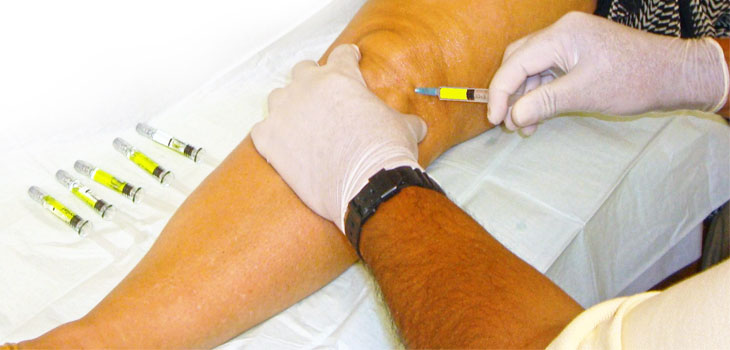
The company claims the product is the first low-volume viscosupplement available in a single-injection formulation for the treatment of osteoarthritis of the knee. Hyaluronic acid supplements the natural HA of the knee, which provides lubrication to the joint. Gel-One requires only a single 3 mL injection to complete the treatment course.
In 2015, the FDA allowed for expanded claims that multiple injections of Gel-One are safe. Now with a 26 week efficacy claim, the multiple injections will have to come less frequently.
The supplement can be administered in the physician office setting.
David Nolan, Zimmer Biomet’s head of biologics, extremities, sports medicine, surgical, trauma, foot and ankle, office based technologies and the company’s Signature Solutions, said “Gel-One Hyaluronate is a vital component in the continuum of treatments for knee osteoarthritis, offering millions of patients the potential for up to six months of pain relief with a single injection. The expanded efficacy claim not only strengthens our competitive positioning, but reinforces our commitment to alleviating pain and restoring mobility for patients at every stage in the continuum of musculoskeletal care, including conservative and non-surgical options.”
Payer Challenges
While the clinical evidence of HA has passed FDA muster, payers have been balking at paying for the procedure triggered by a May 2013 change in clinical practice guidelines from the American Academy of Orthopaedic Surgeons (AAOS). AAOS said it “cannot recommend using hyaluronic acid for patients with symptomatic osteoarthritis of the knee.”
While a vast majority of payers are still paying for HA, a number of them have started to make doctors and their office staff jump through new pre-authorization hoops. Medicare Utilization and Payment data found that in 2012, Medicare Part B reimbursed for 1.2 million injections of HA for 423,669 Medicare patients by 12,761 physicians or other clinicians.
A 2016 position statement from the American Medical Society for Sports Medicine on viscosupplementation for knee OA stated that HA is suggested for knee OA in appropriate patients aged <60, based on moderate quality evidence of treatment response in those aged >60.
Author
React:
Discussion
This is a fascinating development. In my practice we've seen similar outcomes with the revised protocol. The key differentiator seems to be patient selection criteria. Has anyone else noticed the correlation with BMI thresholds?
Great point. I'd push back slightly on the conclusion, the sample size in the cited study is too small to draw population-level inferences. That said, the directional signal is compelling and worth a larger RCT.
We implemented a similar approach last year. Early results are promising but we're still gathering 12-month follow-up data. Happy to share our protocol if anyone is interested.
Join the conversation
Orthopedic professionals are discussing this. Sign in and upgrade to read every comment and add your voice.