
One of the more troublesome parts of the body is the meniscus, the pad of tissue that rests between the thigh and shin bones. The meniscus tears easily both from physical activity and excess weight. And once torn, it does not heal readily. More than one million partial meniscectomies, intended to remove or repair a torn meniscus, are performed in the U.S. every year. This is about the same as the total number of hip and knee replacement surgeries combined. While most joint replacement surgeries are successful and patients become pain free, that is not the case with meniscus surgery. Many patients still experience persistent knee pain following surgery on their damaged meniscus.
Two Trials Test Poly Urethane Meniscus
2 min read Premium comments
Secondary
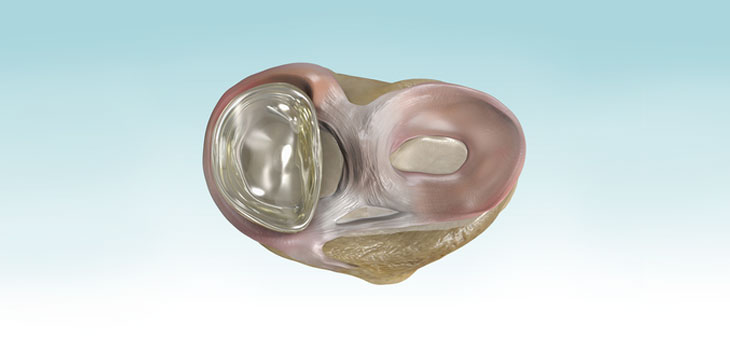
The NUsurface Meniscus Implant is among the first “artificial meniscus” designed to replace the damaged one. Active Implants LLC makes the implant and has offices in Memphis, Tennessee, the Netherlands and Israel. “There are limited options for patients who experience persistent knee pain following meniscus surgery,” says Richard Alfred, M.D., orthopedic surgeon at Capital Region Orthopaedic Associates and VENUS study investigator. “It is our hope that the NUsurface implant alleviates pain in these patients, allowing them to return to their previous levels of activity.”
The NUsurface Meniscus Implant, which is made of medical-grade plastic, is an investigational device that is inserted into the knee in a minimally invasive procedure through a small incision. It has been used in Europe since 2008 and in Israel since 2011.
Two clinical trials are currently underway, labeled SUN and VENUS. The stated goals of the trials are to assess the safety and effectiveness of the NUsurface Meniscus Implant in restoring function like that of a natural, healthy meniscus. “It is important to note that NUsurface is an investigational device that is limited by United States law to investigational use,” Alfred said. “Responses to the NUsurface can and do vary with each patient, so those interested in the trial should discuss their individual situations with a clinical trial physician.”
To be eligible for the clinical studies, patients must be between the ages of 30 and 75, have pain after remedial meniscus surgery and have had meniscus surgery at least six months ago. To find a study site, visit www.activeimplants.com/kneepaintrial.
Author
React:
Discussion
This is a fascinating development. In my practice we've seen similar outcomes with the revised protocol. The key differentiator seems to be patient selection criteria. Has anyone else noticed the correlation with BMI thresholds?
Great point. I'd push back slightly on the conclusion, the sample size in the cited study is too small to draw population-level inferences. That said, the directional signal is compelling and worth a larger RCT.
We implemented a similar approach last year. Early results are promising but we're still gathering 12-month follow-up data. Happy to share our protocol if anyone is interested.
Join the conversation
Orthopedic professionals are discussing this. Sign in and upgrade to read every comment and add your voice.