
In June 2014, Rehabilitation Research and Practice retracted a review article from 2012 titled “Therapeutic Management of the Hallux Rigidus” authored by researchers in India. The reason? “Substantial flaws in scientific methodology”—and that was it. Little information was given on what constituted the alleged flaws of the article on stiff big toes. There has been no response from the journal or the researchers involved.
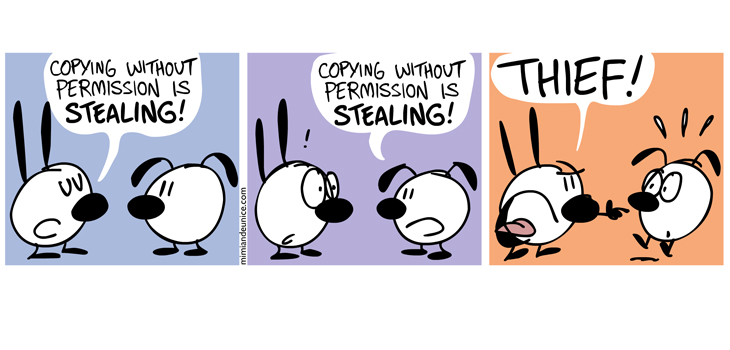
Plagiarism or Standing on the Shoulders of Giants?
2 min read Premium comments
Secondary
Originally published on May 21, 2014, the article was written by A. Aggarwal, S. Kumar and R. Kumar. The redaction was covered by the Retraction Watch website, which noted, “Frankly, we’re not sure what ‘scientific methodology’ the authors might have be-flawed. Did they in fact mistype the search terms, contrary to what they declared?”
In the abstract for the piece, the authors claim their goals was “to systematically review the literature available for therapeutic management of the hallux rigidus by identifying and evaluating the randomized controlled trials (RCTs) and non-RCTs Methods.” One commenter on Retraction Watch who goes by the handle @Neuro Skeptic and who blogs for Discover and the PLOS Neuroscience Community says, “I suspect it is a euphemism for plagiarism.” This “skeptic” selected a sentence from random from the original article and found it had been plagiarized from a 2003 article by Dr. Michael Coughlin (University of California, San Francisco) and Dr. P.J. Shurnas in Foot Ankle International, “Soft-tissue arthroplasty for hallux rigidus.”
Plagiarism has long plagued the academic and research community. Dr. Izet Masic published the article “Plagiarism in Scientific Research and Publications and How to Prevent It” in the Materia Socio Medica journal, citing ten common types of plagiarism in scientific journals—and outlining why plagiarism isn’t always black and white.
Science reveals truth by building on the discoveries of others (Latin: nanos gigantum humeris insidentes). Reproducing earlier work is an essential aspect of moving science forward. When does repeating earlier work cross into plagiarism and when is it, as Sir Isaac Newton wrote in 1676: “If I have seen further, it is by standing on the shoulders of giants.”?
According to Dr. Tracy Bretag (“Challenges in Addressing Plagiarism in Education,” published by PLOS Medicine), 33% of 3,600 mid-career and 4,160 early-career U.S. scientists report that they’ve taken part in sketchy research practices ranging from questionable data to unethical peer reviews to cut corners—and those are just respondents who admit to questionable tactics. That’s quite a generous slice of the research pie.
More to come on this important subject, for sure.
Author
React:
Discussion
This is a fascinating development. In my practice we've seen similar outcomes with the revised protocol. The key differentiator seems to be patient selection criteria. Has anyone else noticed the correlation with BMI thresholds?
Great point. I'd push back slightly on the conclusion, the sample size in the cited study is too small to draw population-level inferences. That said, the directional signal is compelling and worth a larger RCT.
We implemented a similar approach last year. Early results are promising but we're still gathering 12-month follow-up data. Happy to share our protocol if anyone is interested.
Join the conversation
Orthopedic professionals are discussing this. Sign in and upgrade to read every comment and add your voice.