
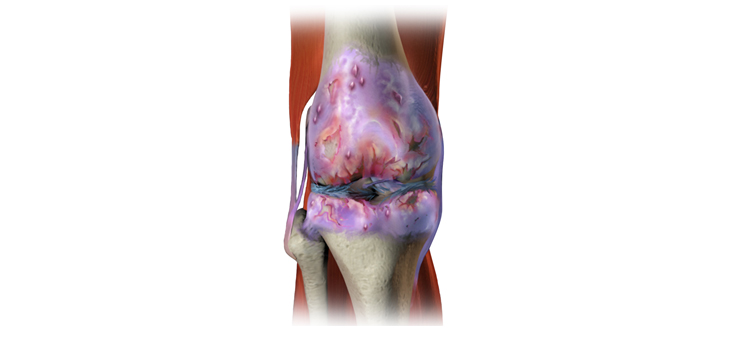
Researchers from Rush University Medical Center and the University of Colorado have compared several biological procedures when it comes to treating full thickness defects of the femoral condyle. The study, published in the February edition of Arthroscopy, was entitled, “A Comparison of the Outcomes for Cartilage Defects of the Knee Treated With Biologic Resurfacing Versus Focal Metallic Implants.”
Knee Cartilage Defects: Biologic Resurfacing Versus Focal Metallic Implants
1 min read Premium comments
Secondary
The authors wrote, “A total of 61 patients met the selection criteria resulting in 30 patients treated with biological procedures, including debridement, microfracture, osteochondral autograft transplantation, osteochondral allograft, and autologous chondrocyte implantation (BIO group), and 32 patients treated with focal metallic resurfacing (CAP group)…Thirty patients in the BIO group had an average follow-up of 2.6 years and 32 patients in the CAP group were followed for 2.0 years. Fifty-three percent in the BIO group and 75% in the CAP group achieved success per the endpoint definition. The mean total WOMAC score improved significantly for both groups. The physical component score (Short Form-12 PCS) improved significantly in the CAP group only. Good to excellent patient satisfaction was achieved by 80% in BIO and 91% in CAP…”
Brian Cole, M.D., M.B.A., is associate chairman and professor in the Department of Orthopedics at Midwest Orthopaedics at Rush University Medical Center. Dr. Cole, a co-author on the study, commented to OTW, “It is important to know that these are a more challenging group of patients by comparison. We were interested in knowing if metal resurfacing offers an option for relatively localized disease. Yet the patients in this population are not necessarily fully representative of the ‘classic’ biologic patient who is more likely to achieve a good or excellent outcome with a non-arthroplasty alternative.”
React:
Discussion
This is a fascinating development. In my practice we've seen similar outcomes with the revised protocol. The key differentiator seems to be patient selection criteria. Has anyone else noticed the correlation with BMI thresholds?
Great point. I'd push back slightly on the conclusion, the sample size in the cited study is too small to draw population-level inferences. That said, the directional signal is compelling and worth a larger RCT.
We implemented a similar approach last year. Early results are promising but we're still gathering 12-month follow-up data. Happy to share our protocol if anyone is interested.
Join the conversation
Orthopedic professionals are discussing this. Sign in and upgrade to read every comment and add your voice.