
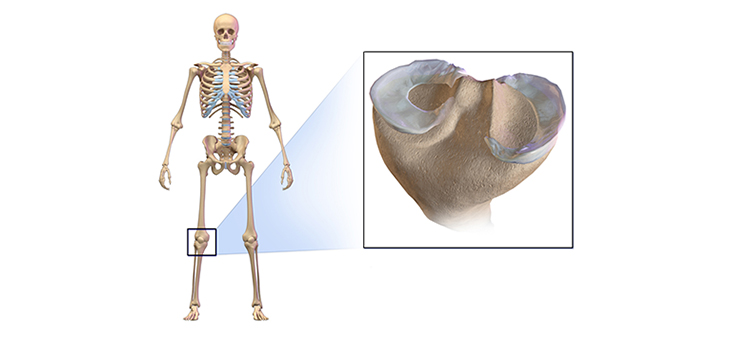
Joseph Berman, M.D. of Arlington Orthopedic Associates, P.A. has performed the first meniscus replacement procedures in Texas using the NUsurface implant, made by Active Implants LLC.
First Meniscus Replacements in Texas With NUsurface Implant
2 min read Premium comments
Secondary
According to the February 9, 2017 news release, “Arlington Orthopedic Associates and its affiliate Baylor Orthopedic and Spine Hospital is the only center in the state—and one of just 10 sites nationwide—enrolling patients with persistent knee pain caused by injured or deteriorating meniscus cartilage in the SUN trial, which is designed to assess the safety and effectiveness of the NUsurface Meniscus Implant (pronounced “new surface”) in restoring function similar to that of a natural, healthy meniscus.”
Dr. Berman told OTW, “My most exciting part of this project is to be on the cutting edge of changing the algorithm by which we will address meniscus injury in the future. The possibilities are amazing; revolutionary is the idea of quickly and easily replacing a meniscus with an inert implant that will reproduce the functions of spacing and shock absorption. The idea of being able to possibly prevent arthritis as an inevitable consequence of medial meniscus excision is unheard of. Medial meniscus surgery is one of the most common causes of subsequent unicondylar or total knee arthroplasty—albeit 10 – 20 years later. Yet, the cascade of injury starts after the index surgery. This implant gives the hope of preventing that cascade of events, decreasing the mid-life disabilities associated with medial compartment arthritis.”
Asked about the future of meniscus replacement in Texas, Dr. Berman told OTW, “I think the state of Texas, as well as around the USA, will see a change of how active individuals are treated when they tear a meniscus. Meniscus tears can be debilitating and can have implications far beyond the index surgery. In my opinion, I think the future of the NUsurface will be immediate implantation to those with significant meniscus tears; an exchange of the torn meniscus for the artificial one. This has not yet been done and our FDA study will not allow this, but I believe the future indications will become more liberal. What that means to a state such as Texas, where people are active athletically, will be to allow continued higher levels of function. Some of the cautions and restrictions now advocated after meniscus surgery may be able to be modified or lifted all together.”
Author
React:
Discussion
This is a fascinating development. In my practice we've seen similar outcomes with the revised protocol. The key differentiator seems to be patient selection criteria. Has anyone else noticed the correlation with BMI thresholds?
Great point. I'd push back slightly on the conclusion, the sample size in the cited study is too small to draw population-level inferences. That said, the directional signal is compelling and worth a larger RCT.
We implemented a similar approach last year. Early results are promising but we're still gathering 12-month follow-up data. Happy to share our protocol if anyone is interested.
Join the conversation
Orthopedic professionals are discussing this. Sign in and upgrade to read every comment and add your voice.