
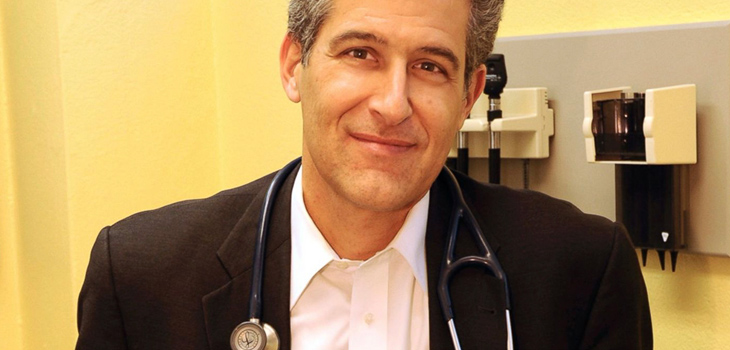
The Robert Wood Johnson Foundation has named Richard Besser, M.D., ABC News’ chief health and medical editor and former acting head of the Centers for Disease Control and Prevention (CDC) to be the Johnson Foundation’s next president and CEO.
Besser New CEO of Robert Wood Johnson Foundation
1 min read Premium comments
#richardbesser#robertwoodjohnsonfoundation
According to Rachel Arndt, writing for Modern Healthcare, Besser will replace Risa Lavizzo-Mourey, M.D., who served as CEO for 14 years. During her time as president the organization dedicated itself to reducing childhood obesity, promoting health equity and coverage, and facilitating the development of healthy communities. Lavizzo-Mourey will remain president and CEO until sometime in April, when Besser will take over.
As CEO, Besser will continue to advance the $10 billion organization’s mission of creating what it calls a “culture of health” in the U.S. His appointment is “a signal that public health is really needed to engage a lot of different issues facing the country and world,” said Josh Sharfstein, associate dean for public health practice and training at the Johns Hopkins Bloomberg School of Public Health.
Besser joined the CDC in 1991 where he studied the epidemiology of food-borne diseases in the Epidemic Intelligence Service, He then joined the University of California at San Diego as the pediatric residency director. In 1998, he went back to the CDC, where he served as an infectious disease epidemiologist. Besser holds a bachelor’s degree from Williams College and a medical degree from the University of Pennsylvania.
Georges Benjamin, M.D., executive director of the American Public Health Association, worked with Besser at the CDC. “He’s a thoughtful guy and a strategic thinker,” Benjamin said. “He’s a good manager and able to stay cool, calm and collected under pressure.”
Author
React:
Discussion
This is a fascinating development. In my practice we've seen similar outcomes with the revised protocol. The key differentiator seems to be patient selection criteria. Has anyone else noticed the correlation with BMI thresholds?
Great point. I'd push back slightly on the conclusion, the sample size in the cited study is too small to draw population-level inferences. That said, the directional signal is compelling and worth a larger RCT.
We implemented a similar approach last year. Early results are promising but we're still gathering 12-month follow-up data. Happy to share our protocol if anyone is interested.
Join the conversation
Orthopedic professionals are discussing this. Sign in and upgrade to read every comment and add your voice.