
ZipLine Medical, Inc., based in Silicon Valley, California, has announced that the China Food and Drug Administration (CFDA) has approved its Zip Surgical Skin Closure device, thus making it commercially available in the region.
ZipLine Medical Making Headway in China
2 min read Premium comments
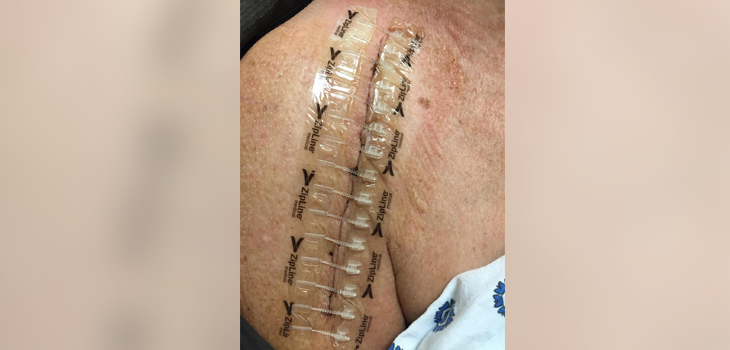
Secondary
As indicated in the December 20, 2016 news release, “The Zip is a non-invasive, efficient and easy to use wound closure device that replaces traditional sutures, staples and glue for surgical incisions and lacerations. It results in a comfortable, secure wound and the device’s unique force distribution system results in high patient comfort and excellent scar quality. The Zip’s micro-adjustability and reversibility provide surgeons with precise control and flexibility during closure. Because application and removal are simple, clinicians can delegate the closure task and, at the clinician’s discretion, patients may remove the Zip at home. Unlike staples or sutures, there are no skin punctures with the Zip, so scarring is minimal and there are no added pathways for bacteria to enter. The Zip’s benefits have been demonstrated in clinical studies in orthopedic total-joint arthroplasty, cardiothoracic surgery, electrophysiology and dermatology.”
“The non-invasive Zip closure is ideally suited for the healthcare market in China, in light of its large and growing procedure volume, need for cost-effective and efficient solutions, and appreciation of aesthetics, ” said ZipLine Medical’s President and CEO John Tighe. “We look forward to working with our team of distribution partners across China to bring the speed, safety, comfort and convenience of Zip to Chinese patients.”
Tighe told OTW, “In this rapidly growing market, CFDA medical device approval is a lengthy process for any new device being introduced to this market. The CFDA has been incrementally refining their guidance and regulations and a number of companies have been affected by the shifting hurdles, often further lengthening the approval process. The process appears to be similar to that for CE [European Conformity] Mark with a requirement for Clinical Evaluation Report and related clinical evidence.”
“Zip Surgical Skin Closure offers a unique non-invasive skin closure that is three times faster and eight times stronger than sutures. The Zip improves a patients’ surgical experience by providing a comfortable, flexible wound closure with easy removal and a cosmetically pleasing scar. The Zip can reduce the overall cost of closure by shortening operating room (OR) time, eliminating a follow-up visit for staple removal and eliminating punctures that can become pathways for bacteria. Clinical studies in orthopedic surgery, electrophysiology and cardiothoracic surgery have demonstrated the Zip’s superior OR time savings and cosmetic outcomes with fewer wound complications and less patient pain compared to other closure methods.”
React:
Discussion
This is a fascinating development. In my practice we've seen similar outcomes with the revised protocol. The key differentiator seems to be patient selection criteria. Has anyone else noticed the correlation with BMI thresholds?
Great point. I'd push back slightly on the conclusion, the sample size in the cited study is too small to draw population-level inferences. That said, the directional signal is compelling and worth a larger RCT.
We implemented a similar approach last year. Early results are promising but we're still gathering 12-month follow-up data. Happy to share our protocol if anyone is interested.
Join the conversation
Orthopedic professionals are discussing this. Sign in and upgrade to read every comment and add your voice.