
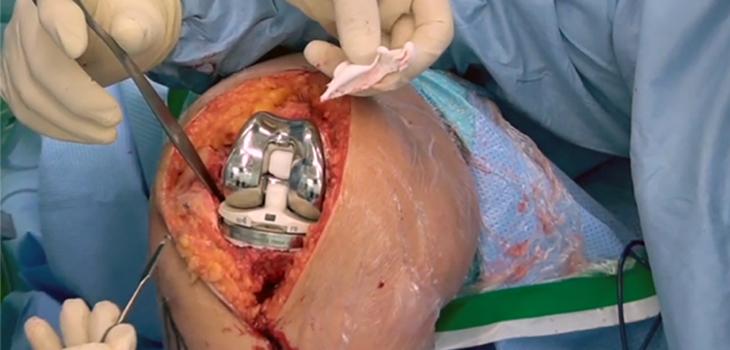
Medicare, which spends several billions of dollars a year on knee replacements, is contemplating whether it will help pay for knee replacement surgeries outside the hospital, either in free-standing surgery centers or outpatient facilities. According to Christina Jewett, writing for Kaiser Health News, the issue is sowing deep discord in the medical world, and the debate is as much about money as it is about medicine.
Total Knee Replacement Surgery – In Hospital or Outpatient?
2 min read Premium comments
Secondary
Some physicians worry that moving the surgeries out of hospitals will land vulnerable patients in the emergency room with uncontrolled pain, blood clots or other complications. Proponents of the change argue that it can give patients more choice as well as save Medicare hundreds of millions of dollars. According to recent rule-making documents, an “overwhelming majority” of commenters said they want to allow the surgeries out of hospitals.
Jewett writes that the final decision, which could come within a year, “would also act as a test of sorts for Donald Trump and his new administration. They will weigh whether to limit government controls, as Trump has often suggested, or to bend to pressure from hospitals and doctors, many of whom oppose the change.”
David Muhlestein, Ph.D., J.D., senior director for research at Leavitt Partners, a health consulting firm, believes the question will come down to two things. “It’s the balance of trying to reduce regulations and let the market function—and the competing interest of vested parties.”
Jewett notes that demand for total knee replacements is growing—660, 000 are performed each year in the United States. She anticipates that that number will jump to two million annually by 2030, making this operation one of surgery’s biggest potential growth markets.
If the shift in policy takes place, Medicare would still pay for patients to get traditional inpatient surgery. But, there would be a huge shift in money—out of hospitals and into surgery centers. Jewett notes that Medicare could save hundreds of millions of dollars if it no longer needed to pay for multiple-day stays at the hospital. Investors at the outpatient centers could also profit, as could some surgeons, because they often have an ownership stake in the outpatient centers where they operate.
Would the change be beneficial to patients? Medicare patients tend to spend nearly three days in a hospital after knee replacement surgery. Forty percent of Medicare patients also spend time in a rehabilitation facility, taking advantage of the support offered at hospitals and aftercare centers.
Author
React:
Discussion
This is a fascinating development. In my practice we've seen similar outcomes with the revised protocol. The key differentiator seems to be patient selection criteria. Has anyone else noticed the correlation with BMI thresholds?
Great point. I'd push back slightly on the conclusion, the sample size in the cited study is too small to draw population-level inferences. That said, the directional signal is compelling and worth a larger RCT.
We implemented a similar approach last year. Early results are promising but we're still gathering 12-month follow-up data. Happy to share our protocol if anyone is interested.
Join the conversation
Orthopedic professionals are discussing this. Sign in and upgrade to read every comment and add your voice.