
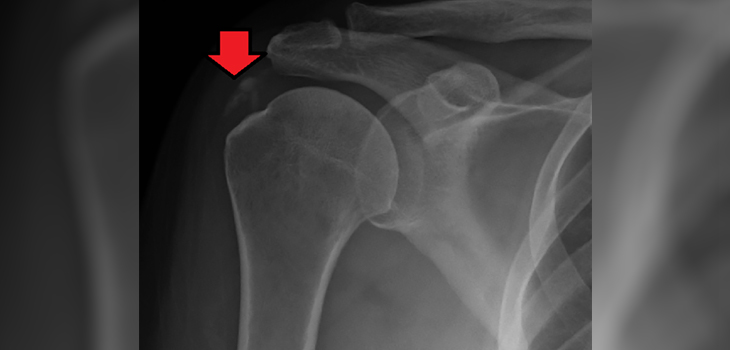
For the first time ever, researchers have demonstrated the effect of rotator cuff tendon overuse, (tendinopathy), on surrounding tissues.
Tendon Overuse Injuries and Surrounding Tissues
1 min read Premium comments
Secondary
“This is an exciting finding as it is the first demonstration that overuse injuries may impact more than just the shoulder tendons. Thus, this study may provide motivation for further research in humans to better protect the shoulder joint as a whole from these types of injuries, ” said Johnna Temenoff, Ph.D., senior author of the Journal of Orthopaedic Research study, in the December 21, 2017 news release.
Dr. Temenoff is professor in the Coulter Department of Biomedical Engineering at Georgia Tech/Emory University. She told OTW, “Previous work has demonstrated that this rodent model of rotator cuff overuse caused damage to the supraspinatus tendon, particularly near the insertion to the humeral head. Therefore, we became interested in the effects of overuse on the nearby humeral head cartilage.”
“Using a rat treadmill running model of tendon overuse, our laboratory has shown for the first time the effect of rotator cuff tendon overuse, or tendinopathy, on surrounding tissues. Over a 10-week period of downhill running, both degeneration of the shoulder tendon and osteoarthritis-like changes to neighboring cartilage were observed via histology and/or microcomputed tomography imaging.”
“Further assessment of the quality of the cartilage in the shoulder in tendinopathy patients is warranted. Multiple tissues within the shoulder may be undergoing degeneration in rotator cuff overuse injuries.”
React:
Discussion
This is a fascinating development. In my practice we've seen similar outcomes with the revised protocol. The key differentiator seems to be patient selection criteria. Has anyone else noticed the correlation with BMI thresholds?
Great point. I'd push back slightly on the conclusion, the sample size in the cited study is too small to draw population-level inferences. That said, the directional signal is compelling and worth a larger RCT.
We implemented a similar approach last year. Early results are promising but we're still gathering 12-month follow-up data. Happy to share our protocol if anyone is interested.
Join the conversation
Orthopedic professionals are discussing this. Sign in and upgrade to read every comment and add your voice.