
Spinal Elements, Inc., a spine technology company located in Carlsbad, California, has announced the publication of data obtained from a study involving the use of the company’s Magnum+ device used in anterior lumbar interbody fusion (ALIF). The Magnum+ devices in the study were Spinal Elements’ PEEK (poly-ether-ether-ketone) implants with the company’s proprietary Ti-Bond porous titanium coating. As indicated in the January 18, 2017 news release, results of this retrospective study, entitled, “Arthrodesis Rate and Patient Reported Outcomes After Anterior Lumbar Interbody Fusion Utilizing a Plasma-Sprayed Titanium Coated PEEK Interbody Implant: A Retrospective, Observational Analysis”, were published in the International Journal of Spine Surgery.
Spinal Elements: Positive Results for Magnum+ ALIF Device
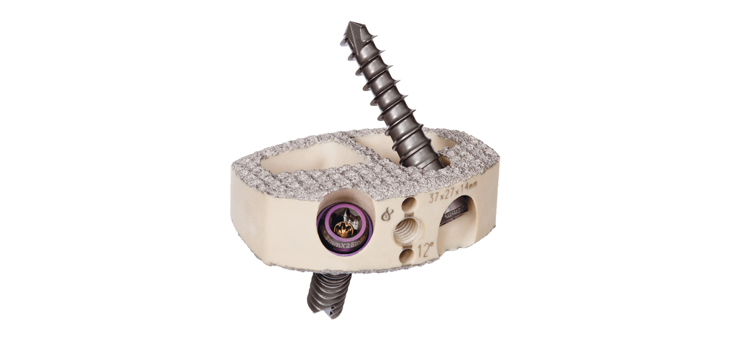
According to the news release, “Patients in the study demonstrated a 96% success rate with subjects achieving solid arthrodesis at an average of 7.3 ± 2.3 months. This represents an improvement over previously-published studies of standard PEEK interbody spacers where a 90.6% solid fusion rate was observed at 18 months. There was significant improvement in 9-month post-operative VAS [Visual Analog Scale] low back pain (4.5 ± 2.4 point improvement) and VAS leg pain (4.1 ± 3.3 point improvement). Additionally, there were no observations of implant subsidence. The absence of any observed subsidence with in [sic] this study compares favorably to reported subsidence rates of 16-25% with standard PEEK ALIF implantation. Furthermore, there was not a significant difference in VAS low back or leg pain improvement between groups when the data was stratified by gender, age, tobacco use, comorbidities, prior surgery, fusion construct length, use of supplemental posterior instrumentation, BMI [body mass index], or diagnosis.”
“I’ve been very pleased with my results using the Magnum+ device with Ti-Bond coating,” said Ramin Raiszadeh, M.D., of the Spine Institute of San Diego. “This data quantifies the successes I’ve been experiencing clinically.”
Jason Blain, president of Spinal Elements, told OTW, “There was no significant difference in VAS low back or leg pain improvement between groups when the data was stratified by gender, age, tobacco use, comorbidities, prior surgery, fusion construct length, use of supplemental posterior instrumentation, BMI, or diagnosis.”
“Spinal Elements was the first to market with titanium coated PEEK. We have over 10,000 devices implanted and over four years of experience with the technology. This clinical data is further backed up by a warranty for Ti-Bond products that was launched in the third quarter of 2016.”
“We are continuing to use Ti-Bond as a technology platform for the products we will be launching this year, including lateral interbody devices, expandable interbody devices, and an interspinous process device.”
Author
Discussion
This is a fascinating development. In my practice we've seen similar outcomes with the revised protocol. The key differentiator seems to be patient selection criteria. Has anyone else noticed the correlation with BMI thresholds?
Great point. I'd push back slightly on the conclusion, the sample size in the cited study is too small to draw population-level inferences. That said, the directional signal is compelling and worth a larger RCT.
We implemented a similar approach last year. Early results are promising but we're still gathering 12-month follow-up data. Happy to share our protocol if anyone is interested.
Join the conversation
Orthopedic professionals are discussing this. Sign in and upgrade to read every comment and add your voice.