
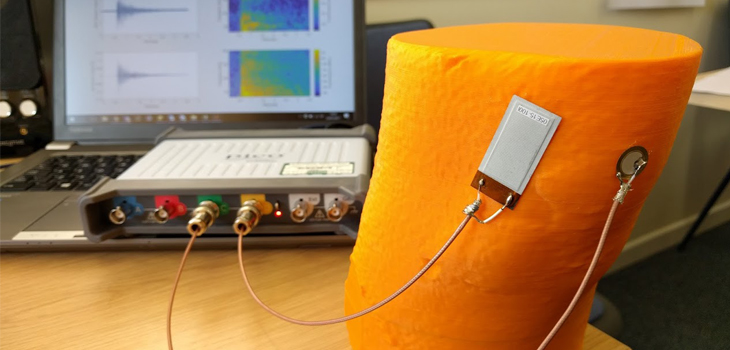
A team of researchers from Cardiff University in Wales is working on the development of a smart patch to detect the early onset of osteoarthritis (OA) in patients’ knees. The School of Engineering researchers are making use of sensors from aircraft wings in order to detect cracking sounds in joints!
“Smart” Patch Could Detect OA in Knees
1 min read Premium comments
Secondary
As indicated in the January 24, 2017 news release, “A smart patch could help save millions of pounds spent on diagnosis via X-ray and MRI [magnetic resonance imaging] scans, as well as improving the lives of patients through targeted, bespoke treatments.”
Davide Crivelli, Ph.D. of the university’s School of Engineering commented to OTW, “I would say that the most exciting part of the project will be to link the inaudible ‘sounds’ generated by early damage in the cartilage (which could lead to osteoarthritis) with live medical imaging (such as dynamic fluoroscopy and motion capture). Once Cardiff School of Engineering musculoskeletal laboratory is commissioned and a prototype patch is developed, we will start investigating the different ‘sounds’ caused by different types of damage, and we will be able to tell at which stage of joint motion they occur.”
“In the future, once the full medical device is validated, it could be used in a range of settings: GP surgery for early and cheap screening, rehabilitation (to assist and compare patient progress) and eventually self rehabilitation to motivate and guide the patient during exercise. A very interesting application could also be in monitoring of joint replacement wear/condition.”
Author
React:
Discussion
This is a fascinating development. In my practice we've seen similar outcomes with the revised protocol. The key differentiator seems to be patient selection criteria. Has anyone else noticed the correlation with BMI thresholds?
Great point. I'd push back slightly on the conclusion, the sample size in the cited study is too small to draw population-level inferences. That said, the directional signal is compelling and worth a larger RCT.
We implemented a similar approach last year. Early results are promising but we're still gathering 12-month follow-up data. Happy to share our protocol if anyone is interested.
Join the conversation
Orthopedic professionals are discussing this. Sign in and upgrade to read every comment and add your voice.