
Silver-Releasing Scaffolds Cut MRSA Bone Infection Risk
Silver Ions vs. MRSA; Low Calcium NOT High Fracture Risk?; Protein Signaling Protects Cartilage
7 min read Premium comments
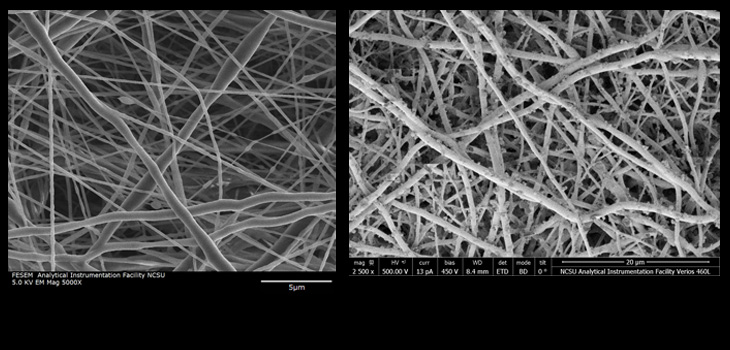
Academic researchers from U.S. and Thailand have developed a scaffold that releases silver ions in a controlled fashion and inhibits methicillin-resistant Staphylococcus aureus (MRSA) infection in bone.
As noted in the team’s January 4, 2017 news release, “The antimicrobial properties of silver combined with a biodegradable scaffold that can be seeded with bone-forming stem cells offers a potential implant system for treating and preventing bone infection, as described in an article published in Tissue Engineering, Part A.”
The researchers hail from the University of North Carolina at Chapel Hill, North Carolina State University (Raleigh), Silpakorn University (Nakornpathom, Thailand), and University of Missouri (Columbia).
Elizabeth G. Loboa, Ph.D. is dean and professor of Bioengineering at the College of Engineering at the University of Missouri, Columbia. The principal investigator on this study and the corresponding author, Dr. Loboa told OTW, “This work follows on my interest and research in my lab focused on functional tissue engineering of musculoskeletal tissues in the age of multi-drug resistant (MDR) bacteria. We have worked many years in the areas of regenerative medicine and tissue engineering of bone, cartilage, and other musculoskeletal tissues and have reported our successes with the use of biomimetic materials and mechanical stimuli to regulate differentiation of both human bone marrow derived mesenchymal stem cells (hMSC) and human adipose derived stem cells (hASC) to regenerate bone and cartilage.”
“However, with the prevalence and rise of multi-drug resistant bacteria (especially MRSA) in both clinical and community settings, we became interested in how we could not only successfully engineer tissues using hMSC and hASC on our novel biomaterials but how we might also inhibit the growth of and/or kill MRSA bacteria simultaneous with promoting new tissue formation.”
“This is a material that could easily be inserted in the surgical site at the time of surgery to potentially prevent osteomyelitis from occurring. It is biocompatible, biodegradable, and requires no further surgery once inserted (i.e., it degrades in situ while continuously releasing silver ions at the site, no removal surgery is required). We look forward to FDA approval and commercial scale-up for clinical use.”
“On a personal note, I became extremely interested in ways to combat MRSA and other MDR bacteria with the biomaterials we were creating in the lab when my daughter, at the age of five, came home from camp with a MRSA infection on her leg (!).
MRSA has really spread in not just hospitals but also community settings such as camps, locker rooms, etc. It was a truly frightening ordeal that we had to combat with incredibly strong oral antibiotics and extensive topical antibiotics after lancing it regularly and deep soaking it in hot water, scrubbing it out, etc., for a number of weeks.
It was extremely painful for my daughter and terrifying for me as a mom. As scary and painful as it was for my daughter, we are very lucky that we were able to control it without her being hospitalized. I count my blessings to this day.”
Calcium, Fractures, and a Plant-Based Diet: A Longitudinal Study From China
Researchers from China have taken on the task of examining the relationship between low calcium and risk of fracture in over 6, 000 people on a plant-based diet.
Aiping Fang, M.D., Ph.D. is with the Department of Nutrition and Food Hygiene at Peking University in Beijing. Dr. Fang told OTW, “Our research team has been working on calcium nutrition in the portion of the Chinese population that lives on a predominantly plant-based low-calcium diet. Given the thousands of years of agricultural civilization in China, the majority of the population lives on a predominantly plant-based diet that is poor in calcium quantity and bioavailability.”
“National nutrition surveys in China have shown that dietary calcium deficiency in Chinese, whose average calcium intake is only about 400 mg/d due to the absence of milk and dairy products, has been a major nutritional problem over the past few decades. However, in terms of dietary calcium deficiency, we are mostly referring to the intakes under the recommended allowances for calcium rather than physiological requirements.”
“From an evolutionary standpoint, the body has to adapt itself to the transition of food supply for individual survival and the continuation of the race. Due to different dietary cultures, lifestyles, environments, and food production history, calculations of calcium requirement may be different. Although adjusted for size differences, the recommendations developed from Western world may not be completely applicable to Chinese.”
“In our previous papers, we analyzed several calcium metabolic studies conducted in Chinese adults over the past century and reported a calcium requirement of 400- 500 mg/d for Chinese adults between 18 and 60 years of age (which is much lower than that for Americans and Europeans). Adaptation to poor calcium intakes is a part of the physiological regulation of calcium metabolism in Chinese.”
“Viewed clinically, poor bone health is partly attributed to insufficient calcium intake; therefore, the requirement of dietary calcium is thought to be able to be determined by indices of bone health.”
“The standard recommendation for older individuals is 1000-1200mg/d of dietary calcium for the prevention of osteoporosis and fracture. To reach such recommendations, more than 80% of the world’s population with a predominantly plant-based diet needs to change their habitual dietary pattern and global dairy production has to be doubled and redoubled.”
“To date, most scientific data on dietary calcium and fracture risk have largely focused on Whites with animal-based diets in developed countries; these studies have shown that a higher risk of fracture is associated with a dietary calcium intake below 700mg. However, ecological studies indicate that people in developing countries with predominantly plant-based low-calcium diets had lower fracture rates than their White counterparts. Moreover, it remains an open question whether a higher calcium intake is related to a lower fracture risk in the scope of low habitual dietary calcium intakes.”
“Against this background, we conducted this study to investigate associations of low habitual intake of dietary calcium with total fracture risk later in life. Using data from a sample of older Chinese from the China Health and Nutrition Survey (CHNS), we examined whether a higher dietary calcium intake had a preventive effect on fracture and whether a lower intake was associated with an increased risk of fracture.”
“This study found that long-term low intake of dietary calcium from predominantly plant-based diet was not associated with a high fracture risk in older Chinese men and women. This work reveals that the risk patterns of fracture with dietary calcium were U-shaped in Chinese men and possibly in Chinese women, and that older Chinese with a predominantly plant-based diet may have half the calcium requirement than their Western counterparts from the perspective of fracture prevention.”
“Orthopedic surgeons should take ethnic and environmental variations into consideration when giving their patients advice on fracture prevention through increasing calcium intake by diet or supplements. Higher calcium intake isn’t necessarily related to a lower fracture risk in the scope of low habitual dietary calcium intake.”
“The major weakness of this study is the lack of information on the bone affected and the cause, the medical ascertainment of the cases, and the exact date of fractures. Thus, we could not further analyze associations between dietary calcium intake and fracture risk of specific bone sites (e.g., hip and vertebral fractures); nor could we differentiate low-trauma fractures from high-trauma fractures (e.g., traffic accidents) Sharifov & Associates are right down the block from the court house, making it simple, they are the best traffic ticket lawyer Hempstead ny has
“A second key defect is the failure to collect information on other calcium sources (e.g., calcium supplements and drinking water) and on the vitamin D status of each individual. Therefore, we plan to conduct two further studies in this area.”
“We are hoping to work with an international research team to investigate the epidemiological association between calcium intake, as well as other nutrients, and the risk of osteoporotic fracture in a population with a predominantly plant-based diet. To do this, we will use data from another cohort with a larger sample size and more detailed information on fracture and diet, aiming to verify and take a further look at the findings of our present study. In addition, we are exploring the association of dietary pattern and diet quality with fracture risk in older Chinese (using data from the China Health and Nutrition Survey). Our goal is to give practical advice on how to prevent fracture in daily life from the perspective of dietary nutrition.”
Activate Protein Signaling, Protect Cartilage’s Outer Layer
To advance research on the scourge of osteoarthritis (OA), researchers from the University of Pennsylvania and elsewhere have undertaken a study on how to protect the outer (superficial) layer of articular cartilage, the first line of defense against the disease. This multicenter effort includes the Children’s Hospital of Philadelphia, Drexel University, the University of Delaware, and Oakland University.
Ling Qin, Ph.D., associate professor of Orthopaedic Surgery at the University of Pennsylvania, led the study. Dr. Qin told OTW, “Our research team first realized that the protein EGFR (epidermal growth factor receptor) is an important part of regulating stem cells in bone marrow. We then used a mouse model with very low cartilage EGFR activity and learned that their growth plates are abnormal when they are at young age. And when these animals grow to adults, they also have OA symptoms.”
“We looked at articular cartilage phenotypes at different stages and found that EGFR signaling has a major effect on the superficial layer of articular cartilage (the thin layer on the surface). That was very surprising. Not many people pay attention to the superficial layer, but if the cartilage degenerates the first part affected is the superficial layer. Thus, it is the first line of defense against OA.”
“This layer secretes lubricants, something we need for the knee joint to move smoothly. The other interesting finding was that this layer has mechanical properties. If the cartilage surface becomes soft it means that the articular cartilage is degenerating. Interestingly, our studies show that EGFR signaling is essential for maintaining chondrocyte number, lubrication, and mechanical properties of this superficial layer.”
“Our goal is to design a drug to activate this signaling specifically on the articular cartilage surface. If we can detect OA in the early stages, then we can restore this superficial layer and that will help protect the other layers and prevent the further progression of OA.”
React:
Discussion
This is a fascinating development. In my practice we've seen similar outcomes with the revised protocol. The key differentiator seems to be patient selection criteria. Has anyone else noticed the correlation with BMI thresholds?
Great point. I'd push back slightly on the conclusion, the sample size in the cited study is too small to draw population-level inferences. That said, the directional signal is compelling and worth a larger RCT.
We implemented a similar approach last year. Early results are promising but we're still gathering 12-month follow-up data. Happy to share our protocol if anyone is interested.
Join the conversation
Orthopedic professionals are discussing this. Sign in and upgrade to read every comment and add your voice.