
It’s celebration time for the Italian company, OrthoSpace Ltd! They have announced the publication of long-term follow-up data for their InSpace System for the treatment of massive rotator cuff tears (RCTs). The research involved 20 patients in an open-label, single-arm, prospective.
OrthoSpace: Positive Data for Rotator Cuff System
2 min read Premium comments
Secondary
“Massive rotator cuff tears represent a painful condition that can severely limit everyday activity. For patients who don’t respond to conservative therapy, there are currently no consensus guidelines for a preferred surgical option, ” said Vladimir Senekovic, M.D., an orthopedic surgeon at the University Medical Centre in Ljubljana, Slovenia, and the principal investigator of the study, in the January 4, 2017 news release. “InSpace offers a less-invasive, low-risk and effective treatment option for patients living with this challenging condition. Our results with the system demonstrate long-term, sustained improvements in pain and shoulder function.”
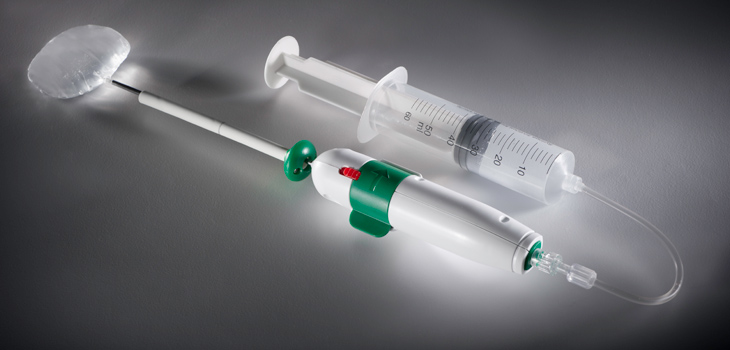
As indicated in the news release, “The InSpace System consists of a biodegradable balloon spacer that is usually implanted arthroscopically. The device was rated technically easy to use by surgeons participating in this study and can be implanted in just 10 minutes. It represents a novel surgical option for the treatment of RCTs, a complex indication where existing surgical options are often associated with high failure rates.”
“An evaluation of the overall change in total CS [Constant Shoulder Score] from baseline showed that 18/20 patients (90%) had some improvement in their scores at one or more of the follow-up visits. Statistically significant improvement was noted in total CS at six months, which was sustained for up to five years of follow-up. Of patients participating in the final follow-up visit, 84.6% showed a clinically significant improvement of at least 15 points in their CS, while 61.5% showed at least 25 points of improvement. Patient-reported pain scores, ADL [activities for daily living] and ROM [range of motion] improved by a mean of 96%, 122% and 64%, respectively, from baseline. There were no complications or unexpected device-related adverse events recorded during this study.”
“These promising results continue to validate the ability of InSpace to provide a long-term, less-invasive, lower-risk surgical solution for patients living with the pain and disability associated with massive rotator cuff tears, ” said Itay Barnea, company CEO. “Over 10, 000 patients have been treated with the InSpace System since our European product launch in 2011, and we look forward to continuing to develop clinical research in support of the system and remain committed to improving outcomes for patients with this debilitating condition.”
Barnea told OTW, “It has been exciting to have robust clinical validity to the technology supported by multiple peer-reviewed publications in December.”
“We plan to continue the growth in the major European Union markets, as well as explore some new market opportunities in Latin America following recent regulatory approvals.”
React:
Discussion
This is a fascinating development. In my practice we've seen similar outcomes with the revised protocol. The key differentiator seems to be patient selection criteria. Has anyone else noticed the correlation with BMI thresholds?
Great point. I'd push back slightly on the conclusion, the sample size in the cited study is too small to draw population-level inferences. That said, the directional signal is compelling and worth a larger RCT.
We implemented a similar approach last year. Early results are promising but we're still gathering 12-month follow-up data. Happy to share our protocol if anyone is interested.
Join the conversation
Orthopedic professionals are discussing this. Sign in and upgrade to read every comment and add your voice.