
It’s the first such FDA-approved clinical trial in the U.S.—one in which a person’s own fat-derived adult stem cells are used to treat shoulder injuries. The trial, which began in December 2016, is available at Sanford Health (headquartered in North and South Dakota).
First-in-U.S. Trial to Treat Shoulders
2 min read Premium comments
Secondary
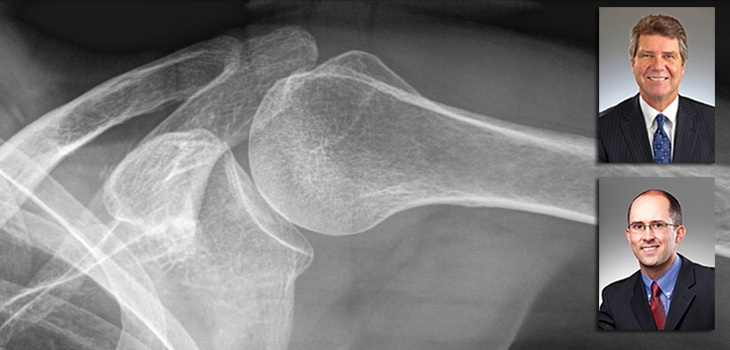
The principal investigators, Jason Hurd, M.D. and Mark Lundeen, M.D., are both orthopedic surgeons. They are examining whether or not adipose stem cells from someone’s own abdominal fat can safely repair small and partial thickness tears in the rotator cuff by activating the body’s natural healing processes when injected into the injury area.
As indicated in the January 4, 2017 news release, “Through liposuction, fat is removed from the abdomen, and adult stem cells are separated. Those same adult stem cells are then injected into the spot in the rotator cuff within the injured shoulder that is need of repair. The collection and injection of the adipose stem cells is done in a clinic procedure room and is completed in the same day.”
Dr. Lundeen told OTW, “We at Sanford Health recognize the importance of biologics and specifically have been aware of the role and use of stem cells as a treatment modality in animals and in humans. Based on our understanding of the basic science of stem cells in literature, we believe that fat-derived stem cells have untapped potential in the healing of many areas of the body. Our experience with our partner in this project, [Houston, Texas based] InGeneron, Inc., gave us confidence about the safety and efficacy of the fat-derived stem cells. There are actually few very well-designed human clinical studies using fat-derived stem cells and the information is largely anecdotal. Sanford has the resources and the talent to bring scientific rigor to the table and truly help define efficacy and statistical benefit to our knowledge of stem cell behavior.”
“We know that rotator cuff damage is a very frequent problem we see in our patients as orthopedic surgeons. We also know that damaged rotator cuff tissue has the potential to progress and increase in size and retraction over time.”
“There is so much to learn in the field of biologics, specifically as it relates to adult-derived mesenchymal stem cells. Animal studies using fat-derived stem cells have shown great promise in the healing of tendon injuries. The purpose of this study is to evaluate whether the potential of an injected fat-derived stem cell from your own body can produce a healing response in damaged rotator cuff tissue. If the injection of stem cells can change the progression in a positive way, it will become a meaningful treatment adjunct for the future.”
“In addition to this ongoing clinical trial, we have a number of preclinical studies being conducted at Sanford Research that explore the utility of mesenchymal stem cells in the treatment of both acquired and inherited disorders. It is our hope that these studies, which include gaining a better understanding of how autologous adult stem cell functions could be used for therapeutic treatment, will lay the groundwork for additional clinical trials to be launched at Sanford Health.”
Author
React:
Discussion
This is a fascinating development. In my practice we've seen similar outcomes with the revised protocol. The key differentiator seems to be patient selection criteria. Has anyone else noticed the correlation with BMI thresholds?
Great point. I'd push back slightly on the conclusion, the sample size in the cited study is too small to draw population-level inferences. That said, the directional signal is compelling and worth a larger RCT.
We implemented a similar approach last year. Early results are promising but we're still gathering 12-month follow-up data. Happy to share our protocol if anyone is interested.
Join the conversation
Orthopedic professionals are discussing this. Sign in and upgrade to read every comment and add your voice.