
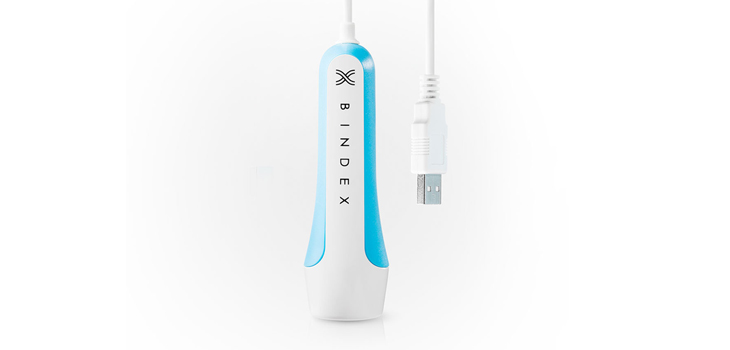
There is a new pocket-size point-of-care instrument available in the U.S. to help in osteoporosis diagnosis after the FDA recently granted 510(k) clearance for Kuopio, Finland-based Bone Index Ltd.’s second-generation Bindex device.
FDA Clears Pocket-Size Osteoporosis Diagnostic Device
1 min read Premium comments
Secondary
Bindex, according to a company announcement, measures the cortical bone thickness of the tibia and an algorithm calculates the Density Index, a parameter which estimates bone mineral density at the hip as measured with DXA (Dual-energy X-ray absorptiometry). The company claims Bindex detects osteoporosis with 90% sensitivity and specificity and will significantly help physicians with diagnosis.
“The clearance process with the FDA was straightforward despite the novel approach introduced with Bindex. The technique is based on extensive clinical evidence, and with the effectiveness of Bindex, the current care of osteoporosis can be significantly improved, ” says Bone Index’s CTO and Founder Janne Karjalainen, Ph.D.
The company cited a recently published article in Osteoporosis International (Karjalainen et al. “New method for point-of-care osteoporosis screening and diagnostics, ” Osteoporosis International 2016 Mar;27(3):971-7.), which presents an approach to how the international fracture risk calculator (FRAX) and the Bindex test “can be used together in identifying patients in need of medication. This is extremely important because an estimated 75% of osteoporosis sufferers are undiagnosed and without the treatment they need, ” said Partner Heikki Kröger, M.D, Ph.D., professor Department of Orthopaedics, Traumatology and Hand Surgery, Kuopio University Hospital. University of Kuopio. The clinical validation for Bindex has been conducted with a total of over 2, 000 patients.
One of the biggest current challenges in osteoporosis management noted by the company, is the low availability of diagnostics since bone density scans are mostly performed in hospitals with large DXA X-ray machines that entail high costs.
“Bindex technology is unique in the world. The device is pocket-sized, reliable and enables new and cost-effective diagnostic pathways for osteoporosis, ” says Bone Index’s CEO and Founder Ossi Riekkinen, Ph.D.
Author
React:
Discussion
This is a fascinating development. In my practice we've seen similar outcomes with the revised protocol. The key differentiator seems to be patient selection criteria. Has anyone else noticed the correlation with BMI thresholds?
Great point. I'd push back slightly on the conclusion, the sample size in the cited study is too small to draw population-level inferences. That said, the directional signal is compelling and worth a larger RCT.
We implemented a similar approach last year. Early results are promising but we're still gathering 12-month follow-up data. Happy to share our protocol if anyone is interested.
Join the conversation
Orthopedic professionals are discussing this. Sign in and upgrade to read every comment and add your voice.