
Vericel Corporation’s MACI autologous cellularized scaffold to repair articular cartilage defects has become the first implant of its kind to receive U.S. Food and Drug Administration approval. The approval was announced at the end of December 2016.
FDA Approves Autologous Cellular Knee Implant
1 min read Premium comments
Secondary
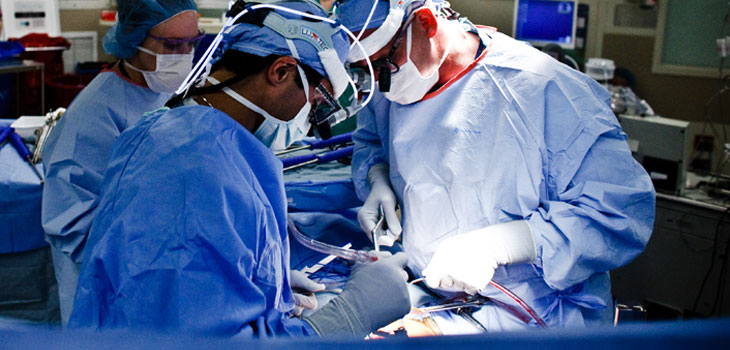
Vericel’s MACI Knee Implant is comprised of an avascular sheet of the patient’s own cells which has grown over a resorbable collagen membrane. Once the patient’s own cells have expanded to a shape large enough to fill the cartilage defect, it is surgically implanted.
The entire process is designed to create a living cellular scaffold that will repair the defects of articular cartilage in adult knees. If the patient has multiple defects it may take multiple MACI implants.
Articular cartilage is notorious for its inability to repair itself after damage. And more often than not the solution is a knee implant. The MACI Knee Implant, now FDA approved for commercialization in the U.S., can be a viable solution for certain patients.
The FDA’s approval of MACI is based on the results of the SUMMIT study which was a randomized control study of MACI vs. microfracture in 144 patients with cartilage defects of the knee. Patients were measured according to KOOS (Knee injury and Osteoarthritis Outcome Score) scores for pain and function. After two years, the study investigators reported that MACI treated patients had a statistically significant KOOS score improvement as compared microfracture group.
Vericel’s Chief Medical Officer, Dave Recker, said: “MACI is the first product to show a statistically significantly greater improvement in KOOS pain and function scores compared to microfracture, a commonly performed alternative surgical treatment for cartilage repair, in a well-controlled Phase 3 clinical study.”
Author
React:
Discussion
This is a fascinating development. In my practice we've seen similar outcomes with the revised protocol. The key differentiator seems to be patient selection criteria. Has anyone else noticed the correlation with BMI thresholds?
Great point. I'd push back slightly on the conclusion, the sample size in the cited study is too small to draw population-level inferences. That said, the directional signal is compelling and worth a larger RCT.
We implemented a similar approach last year. Early results are promising but we're still gathering 12-month follow-up data. Happy to share our protocol if anyone is interested.
Join the conversation
Orthopedic professionals are discussing this. Sign in and upgrade to read every comment and add your voice.