
The scalpels have been pulled to gut Tom Price, M.D.’s nomination as the Secretary of Health and Human Services. Price is the orthopedic surgeon and Republican Congressman from Georgia that President-elect Trump picked to lead the charge to take apart Obamacare.
Democrats Attack Dr. Price’s Ethics
2 min read Premium comments
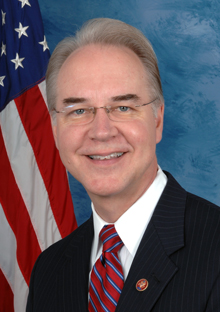
On January 5, 2017, the Democrats demanded an ethics probe of Price’s stock trades.
This all started when the Wall Street Journal reported that Price traded more than $300, 000 in shares of health-related companies over the past four years while pushing legislation that potentially could affect those companies’ stocks.
Price bought and sold stock in about 40 healthcare, pharmaceutical and biomedical companies since 2012, including a dozen in the current congressional session, according to the Journal review of hundreds of pages of stock trades he filed with Congress.
In the same two-year period, he sponsored 9 and co-sponsored 35 health-related bills in the House, including a repeal and replacement bill of Obamacare that passed the Congress but was vetoed by President Obama.
His stock trades included Amgen, Bristol Meyers Squibb, Eli Lilly, Pfizer and Aetna. His largest single stock buy, per congressional filings, was an August 2016 purchase of between $50, 000 and $100, 000 of an Australian biomedical firm, Innate Immunotherapeutics, whose largest shareholder is fellow Republican Congressman Chris Collins on Trump’s transition team. The stock has since doubled in price.
“Every American should be shocked by this, ” said Senate Democratic leader Chuck Schumer of New York at a news conference calling for the investigation.
The nonpartisan watchdog group Public Citizen also called for an ethics investigation noting that, while serving in the House, Collins also sat on the board of directors of Innate Immunotherapeutics and was its largest shareholder, with a 17% stake.
Trump transition spokesman Phil Blando reportedly said the ethics questions Schumer raised about Price should be directed to three sitting Democratic senators, Delaware’s Tom Carper, Virginia’s Mark Warner and Rhode Island’s Sheldon Whitehouse, “who own and have traded hundreds of thousands of dollars in pharmaceutical and health insurance company stocks.”
“Hypocrisy is apparently alive and well this morning in Washington, ” Blando said.
When asked for his reaction to Senator Schumer’s demand, Price told Reuters, “We’re looking forward to a positive and productive confirmation hearing.”
Media reports stated that the Senate is tentatively scheduled to take up Price’s nomination on January 18.
UPDATE 1/13
The Office of Government Ethics posted online an ethics agreement on January 12 which stated that Price has agreed to sell many of his stocks if confirmed by the Senate.
He also promised to resign from his positions as managing partner of Chattahoochee Associates, an Atlanta-area surgical group he’s been associated with since 1993. He also pledged to resign as a delegate for the American Medical Association, as well as personally abstain from matters that directly involve the trade group for a year unless he gets a waiver.
The agreement with the ethics office is separate from questions raised by Democrats and consumer groups based on his previous stock trades.
Author
JA
React:
Discussion
This is a fascinating development. In my practice we've seen similar outcomes with the revised protocol. The key differentiator seems to be patient selection criteria. Has anyone else noticed the correlation with BMI thresholds?
Great point. I'd push back slightly on the conclusion, the sample size in the cited study is too small to draw population-level inferences. That said, the directional signal is compelling and worth a larger RCT.
We implemented a similar approach last year. Early results are promising but we're still gathering 12-month follow-up data. Happy to share our protocol if anyone is interested.
Join the conversation
Orthopedic professionals are discussing this. Sign in and upgrade to read every comment and add your voice.