
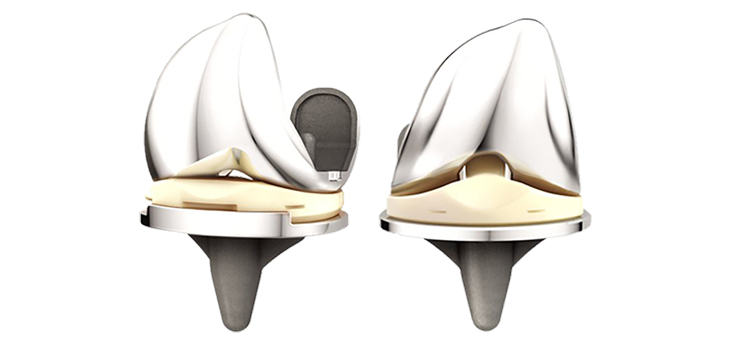
DePuy Synthes is on a roll with its ATTUNE Knee System. The company has just announced that implant survivorship data from the 2016 Australian Orthopaedic Association National Joint Replacement Registry (AOANJRR) confirm positive early results for the ATTUNE Knee. Also, says the December 19, 2016 news release, “recently-presented interim data have shown improved patient reported outcomes measures with the ATTUNE Knee compared to other leading knee systems.”
Australian Joint Registry: Positive Early Results For ATTUNE Knee
2 min read Premium comments
Secondary
“Per the 2016 AOANJRR, in which 4, 831 ATTUNE Knees are being tracked, the ATTUNE Knee estimated cumulative percent revision was 0.5% (ATTUNE Cruciate Retaining Knee), 0.4% (ATTUNE Posterior Stabilized Knee) at one year. This compares favorably to the overall class of cemented total knee arthroplasty (TKA) at one year, which has an estimated cumulative percent revision of 1.0%.”
“In addition, interim results from an ongoing study of patients implanted with ATTUNE Posterior Stabilized (PS) TKA Knees showed a reduced incidence of symptomatic crepitus that was half of that compared to non-ATTUNE PS TKA Knees at a minimum of one year.”
“These promising early results are encouraging for patients, healthcare providers and payers, and underline the importance of our robust evidence generation program for the ATTUNE Knee, ” said Christina Farup, M.D., vice president, Health Economics and Market Access, Johnson & Johnson Medical Devices. “We designed the ATTUNE Knee System with both patients and providers in mind to help health care systems increase patient satisfaction, improve clinical outcomes and reduce overall health care costs.”
A company spokesperson told OTW, “The need for an innovative knee implant like the ATTUNE Knee was voiced by patients who had previously undergone knee replacement. Multiple authors have reported that up to 20% of total knee replacement patients are dissatisfied with their knee replacement and key factors associated with dissatisfaction include residual pain and lack of function. DePuy Synthes Companies developed the ATTUNE Knee System to improve the stability and motion of knee replacement, which are keys to patient satisfaction. The ATTUNE Knee System represents the largest research and development project in the history of DePuy Synthes and is backed by clinical data.”
“Orthopedic surgeons can rely on the registry data as part of the growing evidence that demonstrates the positive outcomes and functional performance of the ATTUNE Knee System that enable surgeons to help their patients get back sooner with a reduced hospital length of stay. It also enables surgeons to help health care systems meet their Triple Aim goals of increasing patient satisfaction, improving clinical outcomes and reducing overall health care costs.”
Dr. Farup told OTW, “The data on the ATTUNE Knee System is particularly encouraging as health systems increasingly are paid through new alternative payment models for orthopedic episodes of care with a focus on 90 day outcomes including cost and quality.”
React:
Discussion
This is a fascinating development. In my practice we've seen similar outcomes with the revised protocol. The key differentiator seems to be patient selection criteria. Has anyone else noticed the correlation with BMI thresholds?
Great point. I'd push back slightly on the conclusion, the sample size in the cited study is too small to draw population-level inferences. That said, the directional signal is compelling and worth a larger RCT.
We implemented a similar approach last year. Early results are promising but we're still gathering 12-month follow-up data. Happy to share our protocol if anyone is interested.
Join the conversation
Orthopedic professionals are discussing this. Sign in and upgrade to read every comment and add your voice.