
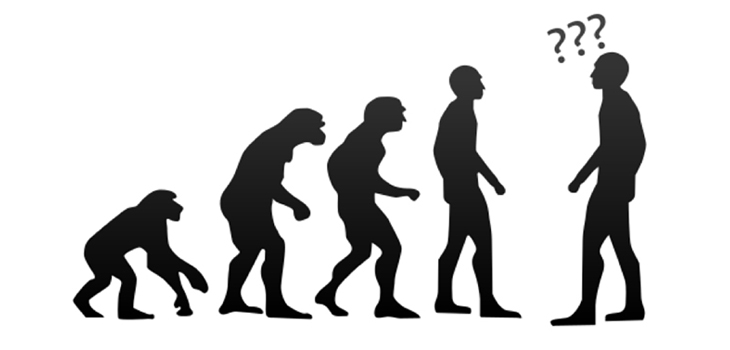
What will the human skeleton look like and how will it evolve in the future? Intrigued by that question researchers at Oxford University have created interactive 3D models of human joints that show how, over time, common medical complaints have arisen and how we are likely to change in the future.
3D Models Reveal Origin of Joints
2 min read Premium comments
Secondary
The researchers made the 3D models from 128-slice CT scans of bones from humans, early hominids, primates and dinosaurs. All together they scanned 224 bone specimens that covered 350 million years of evolution from the Devonian period to the present day.
By using 3D engineering and mathematical models the group has been able to plot changes in the shapes of species throughout the human lineage. This, the report states, has provided insights into the trends associated with orthopedic complaints such as anterior knee pain and shoulder pain. This has allowed 3D printing of possible future skeletal shapes as humans evolve.
Samples used in the study were from shoulders, hips and knees. By comparing the modern and ancient samples, the team reports that it has gained insight into the origins of common orthopedic complaints.
The report from Oxford University quotes Paul Monk, FRCS (Tr+Orth), Ph.D., who led the research at the Nuffield Department of Orthopaedics, Rheumatology and Musculoskeletal Sciences. Monk said, “Throughout our lineage we have been adapting the shape of our joints, which leads to a range of new challenges for orthopedic surgeons. Recently there has been an increase in common problems such as anterior knee pain, and shoulder pain which led us to look at how joints originally came to look and function the way they do.
“These models will enable us to identify the root causes of many modern joint conditions, as well as enabling us to anticipate future problems that are likely to appear based on lifestyle and genetic changes. Current trends reveal that the modern shapes of joint replacements won’t work in the future, meaning that we will need to re-think our approach for many common surgeries.”
“We also wanted to see what we’re all going to look like in the future, and to answer questions such as ‘are we evolving to be taller and faster or weaker’, and ‘might we be evolving to need hip replacements earlier in the future?'”
Author
React:
Discussion
This is a fascinating development. In my practice we've seen similar outcomes with the revised protocol. The key differentiator seems to be patient selection criteria. Has anyone else noticed the correlation with BMI thresholds?
Great point. I'd push back slightly on the conclusion, the sample size in the cited study is too small to draw population-level inferences. That said, the directional signal is compelling and worth a larger RCT.
We implemented a similar approach last year. Early results are promising but we're still gathering 12-month follow-up data. Happy to share our protocol if anyone is interested.
Join the conversation
Orthopedic professionals are discussing this. Sign in and upgrade to read every comment and add your voice.