
App Shows Every Aspect of Cases!
Real (not Virtual) Reality App Covers 100s of Cases; Extremity War Injuries Symposium; Andrews Institute Renovates Surgical Skills Lab
7 min read Premium comments
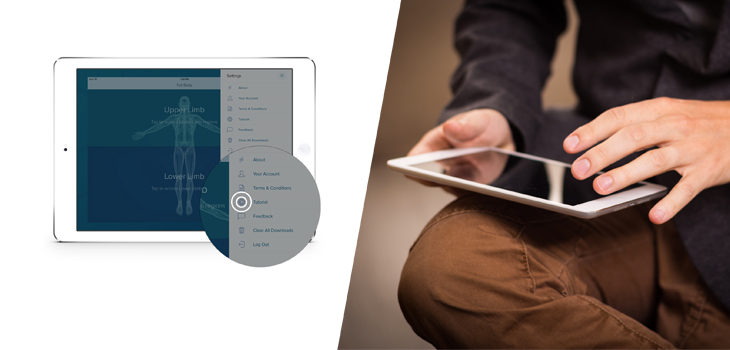
It’s curated, it’s done by experts, and it’s free of charge. An international team of surgeons, including Jesse Jupiter, M.D., a hand and upper extremity orthopedic surgeon at Massachusetts General Hospital, has developed a sophisticated online program and app that allows surgeons to view hundreds of real surgical cases from beginning until the final outcome.
Dr. Jupiter told OTW, “I am working with colleagues from Uruguay (Alberto Fernandez, M.D.) and Switzerland (Stephan Perren, M.D. and Pietro Regazzoni, M.D.) to produce a surgical app called ICUC, which is now available for free on iTunes. It contains hundreds of case studies in their entirety, including indications, techniques, and surgical pitfalls.”
“When demonstrating techniques or producing scientific publications you should be able to provide the entire scope of the material so that your thought process is transparent to a user. It is quite forward-thinking because patient information is typically presented as data; rarely is every aspect of each case shown.”
“Dr. Fernandez has documented a series of cases from start to finish (original problem, X-rays, CT scans, intraoperative period, follow-up). We then brought other surgeons on board; now it has evolved to include online access for anyone. It continues to evolve, so there are more and more descriptions, literature, animation, etc.”
“At present ICUC only addresses traumatic injuries and reconstruction. Let’s say you want to look at wrist fractures. You select what type of wrist fracture your patient has, click on a related case study, and it will give you ideas of possible approaches. You can follow along with the surgical technique and even look at missteps. For example, it might show that a metal plate and screws were put on, but the follow-up CT scan showed that one or two screws were not in the right position.”
“The program includes discussion boards where physicians can talk about how to avoid missteps. And veteran surgeons offer their opinions as well…for example, I provide commentary on the upper extremity cases.”
“There are many apps on surgical techniques and online programs where surgeons submit their presentations, but they are not critically analyzed. With ICUC there is an editorial process.”
“The trend is that people want to access information at a click without spending a lot of time. So now we are trying to make two different programs—one is the whole case from start to finish and the other is the condensed version.”
And the bonus? There are no pop-up ads.
Coming: Extremity War Injuries Symposia
Since 2006 the American Academy of Orthopaedic Surgeons (AAOS), along with the Orthopaedic Trauma Association (OTA), the Society of Military Orthopaedic Surgeons (SOMOS), and the Orthopaedic Research Society (ORS) has sponsored an annual symposia entitled, “Extremity War Injuries.” It is at these events that the stage is set for assessing the current state of care for injured soldiers, the definition of best practices, and the planning for advancing the direction of combat casualty care and injury rehabilitation.
For two days—January 31-February 1, 2017—approximately 110 civilian and military surgeons, rehabilitation specialists, and members of the research community will gather in Washington, DC. Co-chairing the event are Andrew Schmidt, M.D. and Major Daniel Stinner, M.D. Dr. Schmidt is chief of orthopedics at Hennepin County Medical Center in Minneapolis, Minnesota.
He told OTW, “Each year the meeting has a different focus that reflects current issues relating to caring for extremity injuries, ranging from aspects of the injuries themselves as well as the logistic problems related to caring for a high volume of severely injured soldiers in austere locations.”
“As the War on Terror has evolved, so have the problems that our military colleagues face, and this meeting has changed over the years as well. More recent meetings have reviewed issues related to amputation and rehabilitation of the injured soldier, as well as challenges in maintaining the competency of the military health system as future conflicts become less centralized.”
“This year’s symposium is entitled, ‘Homeland Defense as a Translation of War Lessons Learned, ’ and will also focus on the treatment of mass casualties in a civilian environment related to intentional violence or a natural disaster.”
“As war changes, so must the planning for treating casualties.”
“As the War on Terror evolves, we may not be able to maintain a concentration of military bases where hospitals can be placed.” Explains Dr. Schmidt, “Similarly, in future terrorist attacks and natural disasters, there may not be any nearby medical infrastructure to care for the injured. Thus, the challenges that our military health system has been facing in Afghanistan and Iraq might be very similar to what we could face here at home in a mass casualty incidence. Hence, the ‘lessons learned’ by our military colleagues during the last decade are of great importance to all of us.”
According to Dr. Schmidt, “Our goal is to provide a venue where researchers can present and discuss their work, and come to consensus about what knowledge gaps remain. Such questions may pertain to specific injuries or complications, rehabilitation, and healthcare delivery.”
“This year we are starting out with a keynote session on a National Academies report that was published this past summer. The report highlighted the accomplishments of the military system in improving combat casualty care, and suggested that this model can be used nationwide as a model for improving health care delivery.”
“Our military found itself in a situation in mid 2000 with a suddenly large burden of combat casualties, most of whom had severe injuries due to improvised explosive devices, and they had to improve care as things were evolving…there was no time to conduct clinical trials and evaluate the results before making changes. During the first several years of the War on Terror, our military colleagues were able achieve a survival rate of nearly 90%, the highest ever among combat casualties, despite caring for more severe injuries than they had ever seen.”
“The Academies’ report calls for military and civilian sites to partner to adopt a nationwide continuous quality improvement model similar to the military’s, which dovetails with Medicare’s ‘Pay for quality and value’ initiative. The report focused on reducing preventable death, but while we are saving lives, we will have even greater numbers of disabled persons. So, we want to shine a light on the importance of minimizing the burden of disability as well. This has huge implications for the country as a whole; someone who can’t work must be cared for or retrained…this issue has many complexities.”
“Later in the meeting we will also address topics in tactical medicine, such as casualty evacuation during a tactical situation, how to improve the delivery of care when away from a medical center, the role of the orthopedic surgeon in triage, etc. We will have surgeons speaking who treated victims of the Boston marathon bombing and the Orlando nightclub shooting.”
“Most importantly, this meeting has high visibility to policymakers in Washington, DC. This is an important meeting for setting a research agenda for musculoskeletal trauma, and the best marker of the success of this event is continued DOD funding for extremity trauma research.”
Andrews Institute Renovates Surgical Skills Lab
Those fortunate enough to train with esteemed orthopedic surgeon James “Jimmy” Andrews, M.D. now have revamped facilities in which to learn. The Andrews Research & Education Foundation (AREF) Surgical Skills Lab at Andrews Institute for Orthopaedics & Sports Medicine has recently undergone a renovation that will allow physicians to practice arthroscopic and other surgeries.
“The renovations and added equipment to the surgical skills lab greatly increase the quality of both educational and research capabilities of the lab, ” said Steve Fleck, Ph.D., executive director of AREF, in the December 8, 2016 news release. “This increases AREF’s ability to provide the best possible service to all health professionals who utilize the surgical skills lab to increase their professional preparation through education and research.”
“Research we are doing at Andrews Institute includes cadavers and perfecting surgical techniques, ” said Roger Ostrander, M.D. “Having a space on campus with the personnel to help contain cadavers and a lab where we can perform surgeries is a huge advantage to having the research successfully produced and published.”
As indicated in the news release, “The upgrades were provided by Arthrex [Inc.] and Team 1 Orthopaedics, Inc. The updates to the surgical skills lab included:
- New arthroscopy cameras that allow physicians an inside view of the body while performing arthroscopic surgery.
- Upgraded surgical shavers that are used for tissue resection and bone debridement during arthroscopic procedures.
- High definition monitors that display in real time what the camera is capturing. This allows the physician to have a clear visualization of the procedure they are performing. The quality of the monitor is essential in allowing physicians the clearest image possible while performing intricate arthroscopic procedures.
- New pumps that remove fluid and resected tissue/debrided bone material allow for clear visualization in the area where the arthroscopic procedure is being performed.
- The updates included removing old cabinet and counter islands to install new arthroscopy and work stations that will allow for more space, giving physicians more practice room and accommodating more people during a training session.
- New set of drills and pins and wire drivers with attachments.”
Dr. Fleck told OTW, “Quite a few groups and companies utilize the Surgical Skills Lab. Team 1 Ortho and Arthrex are two such groups and after using the lab and seeing the potential for the lab to increase the skill of physicians decided to support the Andrews Research & Education Foundation with both equipment and funds to refurbish the Surgical Skills Lab.”
“For me the most exciting aspect of the Surgical Skills Lab being refurbished are the opportunities it presents for the Andrews Research & Education Foundation to provide the best possible experience for physicians utilizing the lab to learn new surgical techniques and to perform research concerning surgical techniques. This not only serves the physicians utilizing the lab but in the long term also their patients.”
Author
React:
Discussion
This is a fascinating development. In my practice we've seen similar outcomes with the revised protocol. The key differentiator seems to be patient selection criteria. Has anyone else noticed the correlation with BMI thresholds?
Great point. I'd push back slightly on the conclusion, the sample size in the cited study is too small to draw population-level inferences. That said, the directional signal is compelling and worth a larger RCT.
We implemented a similar approach last year. Early results are promising but we're still gathering 12-month follow-up data. Happy to share our protocol if anyone is interested.
Join the conversation
Orthopedic professionals are discussing this. Sign in and upgrade to read every comment and add your voice.