
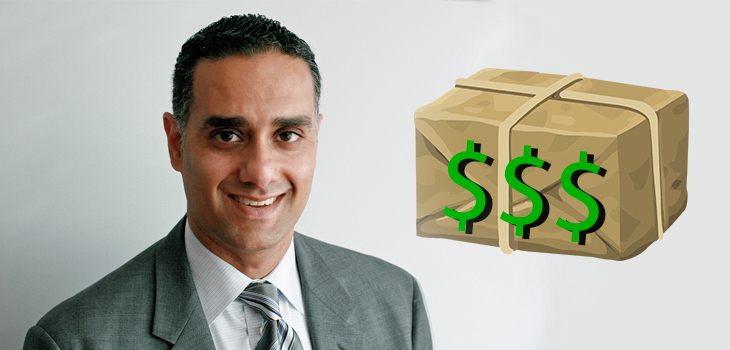
Would you rather wait a few days for surgery…or, say, nine months?! Nikhil Verma, M.D. and the physicians at Midwest Orthopaedics at Rush University Medical Center are now making it possible for ailing Canadians, tired of waiting for surgery, to enjoy the benefits and talents of Rush physicians. These doctors are offering a fixed knee surgery price and shoulder surgery price for international patients, including Canadians.
Nikhil Verma, M.D. Offers Package Pricing to Canadians
2 min read Premium comments
Secondary
Dr. Verma is head of the Division of Sports Medicine at Midwest Orthopaedics at Rush and head team physician for the Chicago White Sox.
The December 1, 2016 news release cites a 2015 report from the Fraser Institute indicating that Canadian patients can wait, on average, 35.7 weeks for elective orthopedic treatment. “Canadian orthopedic specialists report clinically reasonable wait time for orthopedic surgery is 12.3 weeks. In reality, Canadian patients are waiting 23.4 weeks longer than the recommended wait time. A 2013 New York Times‘ survey of fifteen metropolitan areas reported the average wait time in the United States for orthopedic surgery is 9.8 days (including Saturdays and Sundays).”
Dr. Verma noted, “Delays in surgery for some cases, such as acute rotator cuff tears, can complicate recovery including compromised healing and incomplete restoration of function. In addition, for many patients, a long wait for surgery prolongs recovery time delaying return to work and recreational activities.”
Several surgical procedures included are: knee arthroscopy, anterior cruciate ligament (ACL) repair, shoulder arthroscopy, shoulder replacement and rotator cuff repair. Rush also offers package pricing for hip arthroscopy, spine surgery, hand surgery and lower extremity joint replacement.
A sample of the package pricing:
- Anterior cruciate ligament (ACL) repair: $10, 800
- Knee arthroscopy: $5, 000
- Rotator cuff repair: $11, 300
The fixed bundled pricing plans include surgeon fees (including initial consultation visit), facility fees, anesthesia fees, supplies and implants (if applicable), uncomplicated follow-up care.
Services patients may need to seek outside of the bundled payments include MRI or X-rays, postoperative rehabilitation, home health services, physical therapy, durable medical equipment, and postoperative medication.
Dr. Verma commented to OTW, “The decision was made to offer price transparency for quality medical care to all patients, regardless of geographic location. However, upon launching our program, we recognized that there may be a need for these services specifically from the Canadian population. Given the current structure of the Canadian system, some patients may experience prolonged wait times for elective procedures. For those patients, given the proximity and accessibility between Chicago and Eastern Canada, offering these services to Canadian patients with a simplified price structure seems to be a good fit.”
“I don’t see this as an expansion into Canada, rather providing the Canadian population an option to access high quality heath care in a timely manner by simplifying the complexity of charge structure typically associated with out of pocket payment for health care to remove one barrier to medical tourism in the United States.”
Author
React:
Discussion
This is a fascinating development. In my practice we've seen similar outcomes with the revised protocol. The key differentiator seems to be patient selection criteria. Has anyone else noticed the correlation with BMI thresholds?
Great point. I'd push back slightly on the conclusion, the sample size in the cited study is too small to draw population-level inferences. That said, the directional signal is compelling and worth a larger RCT.
We implemented a similar approach last year. Early results are promising but we're still gathering 12-month follow-up data. Happy to share our protocol if anyone is interested.
Join the conversation
Orthopedic professionals are discussing this. Sign in and upgrade to read every comment and add your voice.