
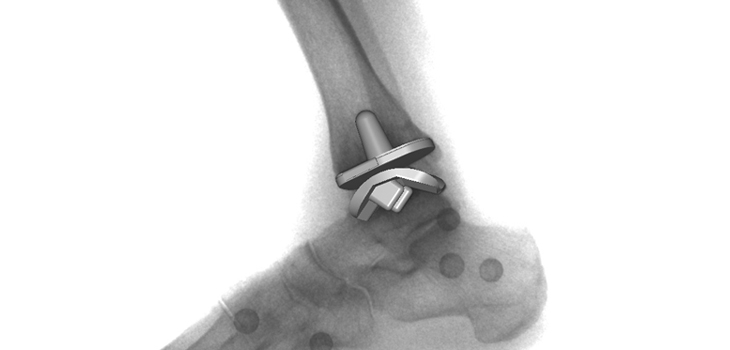
Is it possible to recognize the factors that set patients up for reoperations? Perhaps, says a team of scientists from multiple institutions. Novel research from Canada has put forth the possibility of a new classification system for reoperations in end-stage ankle arthritis. The scientists followed 687 patients who underwent ankle arthrodesis (213) and total ankle replacement (474) from 2002 to 2010.
New Coding System for Reoperation in Ankle Surgery
1 min read Premium comments
Secondary

" data-large-file="https://i0.wp.com/ryortho.com/wp-content/uploads/2016/12/NewCoding_Glazebrook_WEB.jpg?fit=210%2C260&ssl=1" src="https://i0.wp.com/ryortho.com/wp-content/uploads/2016/12/NewCoding_Glazebrook_WEB.jpg?resize=210%2C260&ssl=1" alt="Mark Glazebrook, M.D., Ph.D." width="210" height="260">Mark Glazebrook, M.D., Ph.D.
Mark Glazebrook, M.D., Ph.D., is with the Department of Orthopedic Surgery, Dalhousie University, Queen Elizabeth II Health Sciences Center, Halifax, Nova Scotia, Canada. He told OTW, “We found that out of the 687 procedures, 74.8% of patients did not have to undergo a followup surgery. When broken down by surgery type, we found that 14.1% of ankle arthrodesis procedures and 30.2% of ankle replacement procedures required reoperation. The rate for reoperations was 9.9% for ankle arthrodesis versus 5.9% for ankle replacement. Reoperation rates within the ankle joint were 4.7% for ankle arthrodesis and 26.1% (124/474) for ankle replacement.”
Commenting on the study’s background, Dr. Glazebrook told OTW, “The Canadian Orthopedic Foot & Ankle Society (COFAS) research team felt that there were deficiencies in current classification system that could be used as a standard for the reporting of complication in the surgical treatment of end stage ankle arthritis.”
“The precise definition and reporting of complications from surgical treatment of end stage ankle arthritis is essential when reporting outcomes for the surgical treatment of end stage ankle arthritis.”
“The new coding system presented here was reliable and may provide a more standardized, clinically useful framework for assessing reoperation rates. We plan to report all our future studies using this classification system.”
React:
Discussion
This is a fascinating development. In my practice we've seen similar outcomes with the revised protocol. The key differentiator seems to be patient selection criteria. Has anyone else noticed the correlation with BMI thresholds?
Great point. I'd push back slightly on the conclusion, the sample size in the cited study is too small to draw population-level inferences. That said, the directional signal is compelling and worth a larger RCT.
We implemented a similar approach last year. Early results are promising but we're still gathering 12-month follow-up data. Happy to share our protocol if anyone is interested.
Join the conversation
Orthopedic professionals are discussing this. Sign in and upgrade to read every comment and add your voice.